

Debt consolidation seems like a smart move to simplify your finances and save money. But honestly, plenty of folks make costly mistakes that leave them worse off than before. I’ve seen surveys showing over a third of borrowers regret their debt consolidation choices. Many say their finances barely improved—or got even messier.

Here are five big mistakes that can cost you thousands in extra interest and fees, turning a helpful tool into an expensive headache. Whether it’s grabbing the first loan you see or ignoring your spending habits, these errors happen all the time. But you can totally avoid them.
With the right info, you can steer clear of these traps and make debt consolidation actually work for you. Sometimes, knowing what not to do matters just as much as following the “right” steps.
Key Takeaways
- Shop around with multiple lenders to snag better rates and terms—this can save you thousands.
- Your credit score and debt habits play a huge role in your loan options and long-term results.
- Tackling your spending patterns and building a real budget helps you avoid falling back into debt.
Understanding Debt Consolidation Loans and Options
Debt consolidation means rolling several debts into one payment, usually at a lower rate than you’re paying now. You’ve got a few options—personal loans, balance transfers, and some alternatives. Each one fits different situations.
How Debt Consolidation Works
Let’s break down how debt consolidation can simplify your life. You take out a new loan or credit line to pay off your current debts. Suddenly, those old credit card balances or loans go to zero.
Now you’ve got just one monthly payment to worry about instead of juggling a bunch of due dates. The goal? Lock in a lower interest rate than before. Most debt consolidation loans come with fixed rates, so your payment won’t jump around. That’s a relief compared to credit cards with rates that can spike.
Repaying usually takes 2-5 years. You’ll need a decent credit score—think FICO 670 or better—to get the best deals.
Types of Debt Consolidation Options
From what I’ve seen, borrowers aren’t limited to just personal loans.
- Personal loans are the go-to for most people. You borrow a lump sum and pay off your cards and other debts.
- Balance transfer credit cards? They often give you 0% APR for 12-21 months. You move your balances and pay no interest during that window.
- Home equity loans let you use your house as collateral. Rates are lower, but your home’s on the line if you can’t pay.
- 401(k) loans mean borrowing from your own retirement. You pay interest to yourself, but if you leave your job early, things can get dicey.
- Debt management plans involve nonprofit counselors negotiating with creditors for you. They help set up a payment plan—no new loan needed.
Key Differences Between Personal Loans, Balance Transfers, and Other Methods
Let’s compare the main options, so you can pick what fits.
| Method | Interest Rate | Credit Required | Fees | Risk Level |
|---|---|---|---|---|
| Personal Loan | 7%-36% | Good to Excellent | Origination fees | Low |
| Balance Transfer | 0%-29% | Very Good to Excellent | 3%-5% transfer fee | Low |
| Home Equity Loan | 6%-12% | Good | Closing costs | High |
| 401(k) Loan | 4%-6% | N/A | Minimal | Medium |
- Personal loans are solid if your credit’s good and you’ve got steady income. You’ll know exactly what you’re paying and when you’ll be done.
- Balance transfers work best if you can pay off the balance before the 0% offer ends. You’ll need excellent credit to qualify.
- Home equity loans are cheapest, but you risk your home. That makes them a no-go for a lot of people.
Debt consolidation companies usually charge hefty fees for stuff you can do yourself. I always suggest working directly with lenders or nonprofit credit counselors.
Mistake #1: Failing to Compare Interest Rates and Fees
Too many people jump at the first consolidation offer they see. But if you don’t shop around, you might pay thousands more in interest and fees.

How Hidden Fees Impact Your Savings
Hidden fees can ruin the savings you hoped for. I’ve watched people get excited about a “great deal,” then get blindsided by fees buried in the fine print. Lenders might add fees to your loan balance or take them from the cash you get. You end up paying interest on the fees, too. For example, a $20,000 loan with $1,000 in fees becomes a $21,000 debt.
Balance transfers usually charge 3-5% of what you move. If you transfer $15,000, that’s $450-$750 right there. Some lenders tack on monthly or annual fees. $5-15 a month sounds small, but it’s $60-$180 a year—money better spent elsewhere.
Origination Fees and Prepayment Penalties
Origination fees are what lenders charge just to process your loan. These run from 1-8% of the loan amount. On $25,000, you could pay $250-$2,000. Sometimes, lenders take this fee out of your loan before you even see the money. Other times, they tack it onto your balance, raising your monthly payment.
Prepayment penalties hit you if you pay off the loan early. I always steer clear of loans with these. They can cost hundreds, or a chunk of your remaining balance.
If you get a windfall and want to pay down debt fast, prepayment penalties just get in the way.
Introductory vs Ongoing Interest Rates
Lots of offers flash low intro rates that look amazing. But after 6-18 months, those rates can skyrocket. For example, a loan might start at 5.99%, then jump to 18.99% after the promo ends. Balance transfer cards love this trick, too.
Suddenly, your payment doubles or triples. Always ask what the regular rate will be and when it kicks in. Calculate your total cost using the higher rate, not the teaser. That’s the real number you need to see.
Variable rates can also shift with the market, making your payments unpredictable.
Mistake #2: Overlooking Your Credit and Loan Qualification
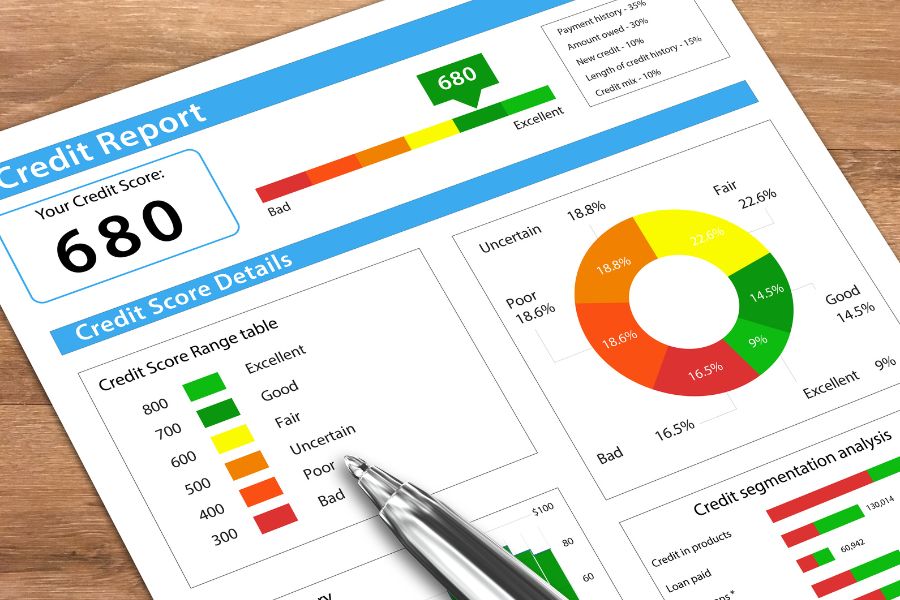
Your credit score has a huge impact on your interest rate. If you ignore your credit report, you could pay thousands more than you need to. High credit utilization—using more than 30% of your limits—hurts your odds.
Impact of Credit Score on Loan Terms
Lenders use your credit score to set your rate. Just a 50-point difference can cost you thousands over the life of a loan. Say you’ve got a 750 score—you might get 6% on a $20,000 loan. Drop to 650, and you’re looking at 12% or higher.
Here’s the math:
- $20,000 at 6% for 5 years = $386/month, $3,200 in interest
- Same loan at 12% = $445/month, $6,700 in interest
That’s $3,500 lost to a lower score. If you’re under 650, work on your credit for a few months before applying. Pay down your balances, and don’t miss payments. Even a small bump in your score can save you serious cash.
Checking Your Credit Report for Errors
Mistakes on credit reports are more common than most people think. About 1 in 4 people find errors that hurt their score. Pull your free report from all three bureaus before you apply. Look for accounts you don’t recognize, wrong payment dates, or debts that aren’t even yours.
Keep an eye out for:
- Accounts that aren’t yours
- Payments marked late when you paid on time
- Old debts that should’ve dropped off
- Wrong balances
You can dispute errors online—usually, they get fixed in about 30 days. Fixing just one mistake might boost your score by 20-50 points. That could mean a much better loan offer.
Credit Utilization and Its Role in Approval
Credit utilization is how much of your available credit you’re using. It makes up 30% of your score. If you’re using more than 30% of your limits, your score drops. Over 50%? Your approval odds tank.
To figure out your utilization:
- Add up all your credit card balances.
- Add up your total credit limits.
- Divide balances by limits.
If you owe $8,000 on $10,000 of limits, that’s 80% utilization. Lenders see that as a red flag. Try to pay cards down to under 30% before you apply. Under 10% is even better.
Some folks get approved, pay off their cards, and see their score jump by 50-100 points in a few months.
Mistake #3: Ignoring Personal Money Habits and Budgeting
Debt consolidation only helps if you change the habits that got you into debt. Without a monthly budget and better money management, you’ll probably pile up new debt on top of your loan.
The Risk of Accumulating New Debt After Consolidation
I’ve watched people consolidate their debt, then max out their cards again in just a few months. Why? They didn’t fix the spending habits that caused the problem.
After consolidation, your credit cards are open again. It’s tempting to use them for “emergencies” or even just wants.
Common traps:
- Using cards for unplanned expenses
- Shopping without tracking spending
- Impulse buys because cards are empty
- Not watching your monthly outflow
Suddenly, you’re stuck with the new loan and new credit card balances. That’s worse than where you started.
Creating a Realistic Monthly Budget
A budget is your best shot at staying debt-free after consolidation. Track every dollar for at least a month. List your income and all fixed bills—rent, utilities, your new loan payment. Then add up groceries, gas, and fun money.
Main budget categories:
- Housing (rent/mortgage, utilities)
- Transportation (car, gas, insurance)
- Debt repayment (consolidation loan)
- Food (groceries, eating out)
- Savings/emergency fund
Set limits for each category, and check in weekly. If you overspend in one area, cut back somewhere else. Your budget should match your goals. If you want to be debt-free, trim extras until you’re there.
Building an Emergency Fund to Avoid Future Debt
An emergency fund keeps you from reaching for credit cards when life happens. Start with $500-$1,000, then aim for three months’ expenses. Save a little from each paycheck—$25-$50 adds up. Keep this money in a separate account, so you’re not tempted to use it.

Emergencies that often cause new debt:
- Car repairs
- Medical bills
- Job loss
- Home fixes
- Pet emergencies
Even a small emergency fund helps you avoid new debt. Once you hit $1,000, focus on paying down your loan.
After you’re debt-free, keep building your fund to six months’ expenses. That way, you’ll never need debt consolidation again.
Frequently Asked Questions
Knowing the risks, spotting scams, and understanding your savings potential will help you make smarter choices with debt consolidation.
What are the risks of taking out a consolidation loan higher than my actual debt?
If I borrow more than I owe, I’m just making things harder on myself. That extra cash usually gets spent on stuff I don’t really need.
Now I’m paying interest on money I didn’t even owe in the first place. For example, if I need $3,000 but borrow $5,000, I’m stuck paying interest on an extra $2,000.
It’s easy to blow the leftover money, and suddenly I’ve got a new loan and new credit card debt from spending the surplus.
Bigger loans mean bigger payments, too. That can stretch my budget thin and make it tough to keep up with other bills.
How do I identify legitimate debt consolidation loan offers from scams?
Let’s be honest—no real lender asks for upfront fees before they approve your loan. If someone wants money before they even look at your application, that’s a huge red flag.
Legitimate lenders always check your credit score and income before making any offers. If you hear “guaranteed approval, no matter your credit,” you’re probably dealing with a scammer.
Take a minute and check the lender’s license on your state’s banking department website. Registered companies stick to the rules and actually care about following the law.
If someone’s pressuring you with “act now” deals or saying you have to decide immediately, walk away. Honest lenders give you space to breathe, review the terms, and think things through.
Can debt consolidation loans actually save me money in the long run?
Debt consolidation loans can absolutely save you money—as long as the new interest rate beats what you’re paying now. Imagine swapping out a 22% credit card for a 15% personal loan; that’s less money wasted on interest.
Don’t just focus on the lower monthly payment. Sometimes stretching the loan term lowers your payment, but you might pay more in interest over time.
Shorter repayment terms usually save you the most, even if your monthly payment stings a bit. A three-year loan will almost always cost less in total interest than a five-year one.
But here’s the catch: you need to avoid racking up new debt. If you go back to using your credit cards, you’ll be stuck paying off the loan and new balances, which is the opposite of what you want.
What are the potential downsides of securing a debt consolidation loan with personal assets?
When you use your home as collateral, you put your property on the line. If you fall behind on payments, you could actually lose your house.
Secured loans often come with extra costs—think appraisal fees, origination fees, and closing costs. Those can add up fast and make the loan a lot more expensive than you expected.
How much you can borrow depends on your asset’s value. If your home’s value drops, you might end up owing more than it’s worth, which is a nightmare scenario.
Processing these loans isn’t quick. Appraisals and paperwork can drag things out, so if you’re in a rush to consolidate and avoid penalties, this might not be the best route.
What are the best practices for choosing the most advantageous debt consolidation loan?
Start by getting prequalified with a few different lenders. Most use soft credit checks, so your score won’t take a hit while you shop around.
Look at the total cost of the loan, not just the monthly payment. Loan calculators are your friend—they show you how much interest you’ll pay over the life of the loan.
Pick lenders that fit your needs. Some have minimum loan amounts or specific credit score requirements, and credit unions often surprise you with great rates.
Always read the fine print. Watch out for origination fees, prepayment penalties, and late charges—those little details can quietly drain your wallet if you’re not careful.
How does my debt-to-income ratio affect my eligibility for debt consolidation loans?
Ever wondered why lenders seem obsessed with your debt-to-income ratio? Honestly, it’s a big deal. This number lets them see exactly how much of your monthly income you already spend on debt payments.
Most lenders feel more comfortable if your ratio sits below 40%. If you’re above that, they might see you as a risky bet. Sometimes, that means higher interest rates—or just a flat-out denial.
I’ve had to do the math myself. You just take all your monthly debt payments and divide them by your gross monthly income. It’s simple, but it can be a little eye-opening.
Don’t forget: if you’re considering a new consolidation loan, you should include that payment in your calculation. It helps you see if you can really afford to take on something new.
If you want to score better rates, focus on improving your ratio before you apply. Tackle some of your existing debt first, or maybe look for ways to boost your income. A side gig can make a surprising difference.
Debt consolidation can be a great move, but it all comes down to those numbers. So, keep an eye on your ratio—it’s more important than most people realize.
