

Let’s be real—house hunting is exciting, but it’s easy to get carried away. I’ve definitely caught myself falling for homes way outside my price range. The median-priced new home in 2024? That’s $495,750. But here’s the kicker: 77% of US households can’t actually swing that. So, there’s this huge gap between what we want and what we can actually afford. That’s where money headaches start.
Here’s the brutal truth: You’ve got to keep your total monthly mortgage payment at or below 25% of your take-home pay. Go over that, and you risk turning your dream home into a financial mess. Lenders usually approve you for way more than this, and that’s why so many people end up house-poor, barely scraping by.

Let’s break down the real math behind home affordability. I’ll share the sneaky costs people forget, and by the end, you’ll see exactly how much house you can actually buy—without tripping into the usual money traps.
Key Takeaways
- Keep that monthly mortgage payment under 25% of your take-home pay. Seriously.
- Don’t forget about the down payment, mortgage insurance, property taxes, and maintenance when you’re running the numbers.
- Shop for the right loan and lender, but don’t ignore your existing debts. They matter—a lot.
The Core Math: Calculating How Much House You Can Afford
Let’s talk numbers. When you apply for a mortgage, lenders use two main ratios to size up your borrowing power. These ratios compare your income to your housing costs and total debt payments.
Understanding the 28/36 Rule
Most lenders stick to the 28/36 rule when I go for a mortgage. Basically, housing costs shouldn’t go over 28% of your gross monthly income, and your total debt payments need to stay under 36%.
Here’s what that looks like:
- Front-end ratio: 28% for housing only.
- Back-end ratio: 36% for all debts combined.
Say I make $6,000 a month before taxes. The max I should spend on housing? $1,680 (that’s 28% of $6,000). For all debts, including the mortgage, it’s $2,160.
Some lenders stretch these numbers, especially if you’ve got a great credit score. FHA loans, for example, let you go up to 31% for housing and 43% for total debt.
Front-End and Back-End Ratios
The front-end ratio is just about housing expenses. That’s your mortgage payment, property taxes, homeowners insurance, and mortgage insurance if you need it.
Front-end ratio calculation:
(Monthly housing costs ÷ Monthly gross income) × 100
The back-end ratio? It’s all your monthly debt payments—credit cards, student loans, car payments, plus the mortgage.
Back-end ratio calculation:
(Total monthly debt payments ÷ Monthly gross income) × 100
Your debt-to-income ratio (DTI) is huge here. If I’ve got $500 in debt payments and my new mortgage is $1,680, that’s $2,180 total. With a $6,000 income, my DTI is 36.3%.
Monthly Gross Income and Income Limits
Your monthly gross income is the foundation of all these calculations. That’s your pre-tax income from every source—salary, bonuses, side gigs—as long as you can prove it.

Lenders usually want to see two years of steady income. If you work for yourself, you’ll need those tax returns.
Check out this quick table for different income levels:
| Monthly Gross Income | Max Housing (28%) | Max Total Debt (36%) |
|---|---|---|
| $4,000 | $1,120 | $1,440 |
| $6,000 | $1,680 | $2,160 |
| $8,000 | $2,240 | $2,880 |
| $10,000 | $2,800 | $3,600 |
A lower DTI ratio gives you more borrowing power and better rates. I always aim for that.
Breaking Down Your Mortgage Payment
Your monthly mortgage payment isn’t just the loan. It’s got four main parts, and a lot of first-time buyers miss this. Each one changes how much house you can actually afford.
Principal and Interest Explained
Principal and interest are the heart of your mortgage. Principal is what you borrowed. Interest is what the bank charges for lending you the cash.
At the start, most of your payment goes to interest. On a $300,000 loan with a 6% rate, your first payment might be $300 principal and $1,500 interest.
Over time, that flips. By year 10, maybe $600 goes to principal and $1,200 to interest. In the final years, it’s almost all principal.
15-year vs 30-year mortgage?
- 30-year: Lower monthly payments, but you pay way more in interest.
- 15-year: Higher payments, but you save a ton on interest.
I use a mortgage calculator to see exactly how these numbers play out for my situation.
Property Taxes and Homeowner’s Insurance
Property taxes and homeowner’s insurance usually get bundled into your mortgage through escrow. The lender collects these each month and pays the bills for you.
Property taxes are all over the place depending on where you live. For a $400,000 home:
- Texas: $8,000-12,000 per year ($667-1,000/month)
- Florida: $4,000-6,000 per year ($333-500/month)
- California: $5,000-8,000 per year ($417-667/month)
Homeowner’s insurance protects your place. The cost depends on value, location, and risk factors (think floods or earthquakes).
Lenders usually require you to escrow these. They total up the annual costs, divide by 12, and tack it onto your mortgage payment.
Heads up: These costs can climb every year, so even with a fixed-rate mortgage, your payment might go up.
HOA Fees and Other Recurring Charges
HOA fees are monthly charges for stuff like landscaping, pools, or security in your neighborhood. They’re not part of your mortgage, but lenders count them when figuring out what you can afford.

HOA fees can range from $50 to $500+ a month. What do you get?
- Landscaping, exterior maintenance
- Pool, gym, clubhouse
- Security or gated entry
- Trash and snow removal
Other regular charges might pop up too:
- Private mortgage insurance (PMI) if your down payment’s under 20%
- Flood insurance if you’re in a risky area
- Special assessments for big repairs
I always tell people: include HOA fees in your 25% housing budget. If you’ve got a $200 HOA, that’s $200 less for your mortgage.
HOA fees usually go up every year. Plan for 3-5% increases when you’re budgeting long-term.
Down Payment and Mortgage Insurance Considerations
Your down payment changes everything—your monthly payment, whether you pay mortgage insurance, and even your interest rate. It can save you thousands over the life of your loan.
Down Payment Strategies
I usually recommend aiming for 20% down, but you’ve got options. Conventional loans can go as low as 3% down. FHA loans need just 3.5%.
VA loans and USDA loans? They sometimes let you buy with zero down if you qualify.
Here’s a quick look at common down payments:
- 3-5%: Higher payments, PMI required
- 10-19%: Moderate payments, still PMI
- 20%+: Lower payments, no PMI
Try running your budget with different down payments. A bigger down payment shrinks your loan and kills off PMI.
Don’t forget about your emergency fund. Don’t empty your savings just to hit 20% down.
The Role of Private Mortgage Insurance (PMI)
Private mortgage insurance protects the lender if you default. You pay PMI if your down payment is less than 20%.
PMI usually costs 0.5% to 1% of the loan per year. On a $300,000 mortgage, that’s $1,500 to $3,000 a year—added right onto your payments.
You can ditch PMI once you hit 20% equity. That happens by:
- Making monthly payments
- Your home going up in value
- Tossing in extra principal payments
Most lenders drop PMI at 22% equity automatically. You can ask them to remove it at 20% with a new appraisal.
20% Down Payment and Its Advantages
Putting down 20% wipes out PMI completely. On a $400,000 home, that’s $80,000 up front, but the monthly savings are real.

Why 20% down rocks:
- No PMI (saves $200-400+ a month)
- Lower rates from lenders
- Smaller loan, less interest paid
- Stronger offers in a hot market
With 20% down, you build equity faster and keep your payments lower. Sellers also love buyers with big down payments—it shows you’re solid.
But, if you wait too long to save 20%, you might miss out if prices jump in your area.
Debt, Loans, and Other Financial Commitments
Your current debts—student loans, credit cards, car payments—chip away at how much house you can afford. Lenders look at your debt-to-income ratio, so you need to know how these numbers play out.
Student Loans and Credit Cards Impact
Student loans can really limit your budget. I’ve seen buyers with $500 in monthly student loans lose $100,000 in buying power. Lenders count your minimum student loan payment in your DTI. If you pay $300 a month, that’s $300 less for housing.
Credit cards can hurt even more. Lenders use your minimum payment, not your balance. A $5,000 credit card balance with a $150 minimum payment can cost you about $30,000 in buying power.
Here’s the math:
- $200 monthly debt = $40,000 less house
- $400 monthly debt = $80,000 less house
- $600 monthly debt = $120,000 less house
Pay off credit cards before you start house hunting. Student loans are tougher, but an income-driven repayment plan might help lower your payments.
Car Loans and Existing Monthly Debt
Car loans count against you, too. A $400 car payment means $400 less for your mortgage.
Lenders add up all your monthly debts—car loans, personal loans, child support, credit card minimums.
Remember the 36% rule. All your debt payments (including the future mortgage) shouldn’t go over 36% of your gross income.
If you make $6,000 a month, your max total debt is $2,160. If you already have $800 in debt, you can only spend $1,360 on housing.
If you can, pay off your car early or trade it for something cheaper. Every $100 you cut from monthly debt adds about $20,000 to your home budget.
Don’t take on new debt while you’re shopping for a house. Even a small personal loan can mess up your mortgage approval.
Choosing the Right Loan and Lender
Let’s be honest—choosing the right loan and lender can feel overwhelming. Each loan type comes with its own quirks, and those quirks can really change how much house you’ll actually get for your money.
Lenders don’t just hand out mortgages; they dig into your finances using specific criteria. I always suggest playing around with a few mortgage calculators before you even think about applying.
Conventional, FHA, and VA Loan Types
Conventional loans aren’t backed by the government. You’ll need a higher credit score and a decent down payment—at least 3%.
If you put down less than 20%, get ready for private mortgage insurance (PMI). That’s just the way it goes.
These loans suit people with strong credit and steady income. The loan limits change depending on where you live, but they’re usually higher than what you’d get with government loans.

FHA loans, on the other hand, come from the Federal Housing Administration. They’re a favorite for folks with lower credit scores.
You can get in with just 3.5% down if your score hits 580 or above. The catch? FHA loans tack on mortgage insurance premiums for the life of the loan.
That insurance bumps up your monthly payment, but it does open the door to homeownership with less cash upfront.
VA loans are a huge benefit for veterans and active military. No down payment? Check. No PMI? Also check.
You’ll probably score a lower interest rate than with a conventional loan. There’s a funding fee, but you can just roll it into the loan if you want.
How Lenders Evaluate Your Affordability
Let’s talk about what lenders really care about: your debt-to-income ratio. Most want your total debts to stay under 36% of your gross income.
Your credit score isn’t just a number—it sets your interest rate. Higher scores mean lower rates, which stretch your buying power.
Employment history matters, too. Lenders look for at least two years of steady work in the same field.
Down payment size changes everything. Bigger down payments shrink your monthly bill and can snag you a better rate.
And don’t forget about cash reserves. Lenders want to see you’ve got some savings left after closing, just in case life throws you a curveball.
How Mortgage Calculators Help
Mortgage calculators are lifesavers. You can plug in different loan amounts, rates, and down payments to see what you can actually afford.
It’s smart to compare loan types side by side. Try out an FHA loan with 3.5% down, then a conventional with 10%—the difference can be surprising.
Most calculators include property taxes and insurance. That way, you get a real sense of what you’ll owe each month.
I always try a few calculators from different mortgage lenders. They each use different assumptions for taxes and insurance, so you get a fuller picture.
Additional Costs and Smart Home Buying Tips
Buying a home isn’t just about the mortgage payment. There are a bunch of upfront expenses and ongoing costs, and honestly, a lot of first-timers don’t see them coming.
If you budget for these extras and keep your long-term financial goals in mind, you’ll avoid nasty surprises down the road.
Closing Costs and Home Inspection Fees
Closing costs sneak up fast. They usually run 2% to 5% of your home’s price.
On a $300,000 house, I’d set aside $6,000 to $15,000 just for closing.
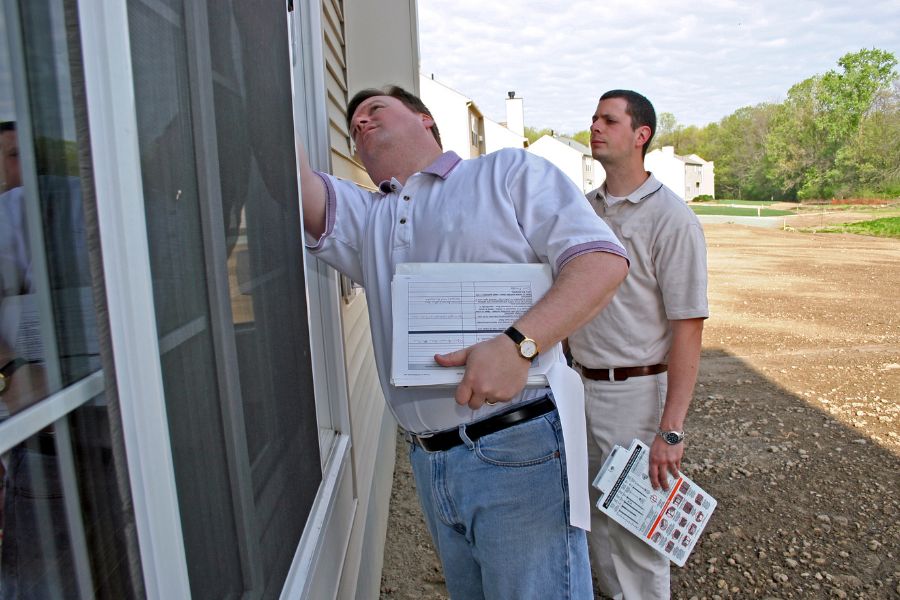
Here’s what you’ll likely pay for:
- Loan origination fees (0.5% to 1% of the loan)
- Title insurance ($500 to $2,000)
- Attorney fees ($500 to $1,500)
- Recording fees ($100 to $500)
- Prepaid property taxes and insurance
Home inspection fees run $300 to $600. It’s tempting to skip, but I never do. Inspections can save you thousands by catching issues early.
Your real estate agent can break down closing costs for you. Some lenders offer no-closing-cost loans, but they’ll usually bump up your rate.
Shop around a bit. Sometimes, you can negotiate with sellers to cover some closing costs, especially if the market’s in your favor.
Budgeting for Moving and Lifestyle Expenses
Moving isn’t cheap. Local moves cost $800 to $2,500, and long-distance jumps can hit $5,000.
Typical moving costs:
- Movers or truck rental
- Packing supplies and boxes
- Utility connection fees ($100 to $300 per service)
- Address changes (licenses, mail forwarding)
I always budget another $2,000 to $5,000 for furniture, appliances, or quick repairs right after moving in. Don’t forget yard tools or cleaning supplies—those little things add up.
Think about lifestyle changes, too. Is your commute getting longer? Gas costs will go up.
Bigger houses mean higher utility bills. Include these when you’re figuring out what you can really afford.
Aligning Your Home Budget With Financial Goals
Smart home buying means balancing your new place with your other priorities. I always tell people—don’t drain your emergency fund or stop saving for retirement just to buy a house.

Here’s how I keep things balanced:
- Hold onto 3-6 months of emergency savings after closing
- Keep up with 401(k) contributions to snag employer matches
- Set aside 1% of the home’s value each year for maintenance
- Plan for big goals, like kids’ college funds
If buying a $400,000 house means you can’t save for retirement, maybe look at a $300,000 option instead.
It’s worth reviewing your whole financial picture before buying. If you’ve got big student loans or credit card debt, it might be smarter to wait and improve your debt-to-income ratio.
Buying a home should help your financial stability, not make it shakier.
Frequently Asked Questions
I hear these questions from buyers all the time—figuring out your home buying budget can be confusing. The basics come down to income, debts, and your down payment.
What salary range is needed to afford a $300,000 home comfortably?
You’ll want to earn between $75,000 and $90,000 a year for a $300,000 home. This assumes good credit and a 10-20% down payment.
With 10% down, your monthly payment lands around $2,100. If you use the 28% rule, you’ll need about $7,500 in gross monthly income.
If you’ve got a lot of debt, you’ll need closer to $90,000. If you’re debt-free and have great credit, $75,000 might do the trick.
What are the salary requirements to purchase a $400,000 property?
For a $400,000 home, aim for $100,000 to $120,000 in yearly income. Your exact number depends on your down payment and debts.
With 20% down, your payment’s about $2,400 a month. That means you need roughly $8,500 in gross monthly income to stay under the 28% housing rule.
If you only put down 5%, you’ll pay more due to PMI. In that case, you’ll probably need $125,000 a year to cover the extra costs.
What income level should you have to afford a $1,000,000 house?
You’re looking at $250,000 to $300,000 a year in income for a million-dollar house. You’ll also need solid savings and little debt.
With 20% down, your monthly payment will be about $6,000 to $7,000. The 28% rule says you should bring in $21,000 to $25,000 a month before taxes.
Lenders like to see 6-12 months of mortgage payments in savings, too. That’s another $40,000 to $80,000 you’ll need in the bank.
What factors determine how much mortgage you can qualify for on an $83,000 salary?
On $83,000 a year, most people qualify for a mortgage between $280,000 and $350,000. Your debt-to-income ratio is the big factor here.
Lenders start with your gross monthly income, about $6,900. With zero debt, you might afford up to $1,900 in housing payments using the 28% rule.
Car payments or student loans will lower what you can borrow. Credit card debt can really cut into your buying power.
A bigger down payment helps, too. The more you put down, the less you need to borrow, and the lower your monthly payment.
How do you calculate the maximum house price you can afford on a $65,000 income?
If you make $65,000 a year, your max house price usually falls between $220,000 and $260,000. I figure this based on a gross monthly income of about $5,400.
With the 28% rule, you can spend $1,500 a month on housing—including mortgage, taxes, and insurance.
A $1,500 payment covers a $220,000 home with 10% down. If you can put 20% down, you might stretch to $260,000.
Don’t forget property taxes and insurance—they can eat up $200 to $400 of your monthly budget, depending on where you live.
At a $230,000 annual salary, what is the value of the home you can afford?
If you’re making $230,000 a year, you can look at homes in the $750,000 to $900,000 range. That’s a pretty comfortable spot to be in, honestly.
Your gross monthly income hits about $19,200. Using the classic 28% rule, you could put up to $5,400 toward housing each month.
Let’s say you’ve got excellent credit and can swing a 20% down payment—$5,400 a month could get you a house near $800,000. If you’re able to put even more down, maybe you can stretch that budget closer to $900,000.
But here’s the thing: lenders love to see a strong cash cushion at this level. I’d recommend having $50,000 to $100,000 in savings, and that’s after you’ve handled the down payment.
