

So, you’ve probably heard the advice: start with a $1,000 emergency fund. It sounds reasonable at first, but in reality, that amount barely scratches the surface when real life happens. Average rent these days is over $1,400. Mortgage payments? Usually north of $1,000. One surprise bill and—bam!—that so-called safety net is gone.
Let’s be honest: A $1,000 emergency fund just doesn’t cut it for most people anymore. It might have worked years ago, but now, with housing, healthcare, and even groceries costing more, you need at least one month’s expenses as a real starting point. I’ve watched friends and clients fall into traps because they stuck to outdated advice. Your emergency fund should fit your actual life—think about your expenses, family, and how steady your job is.
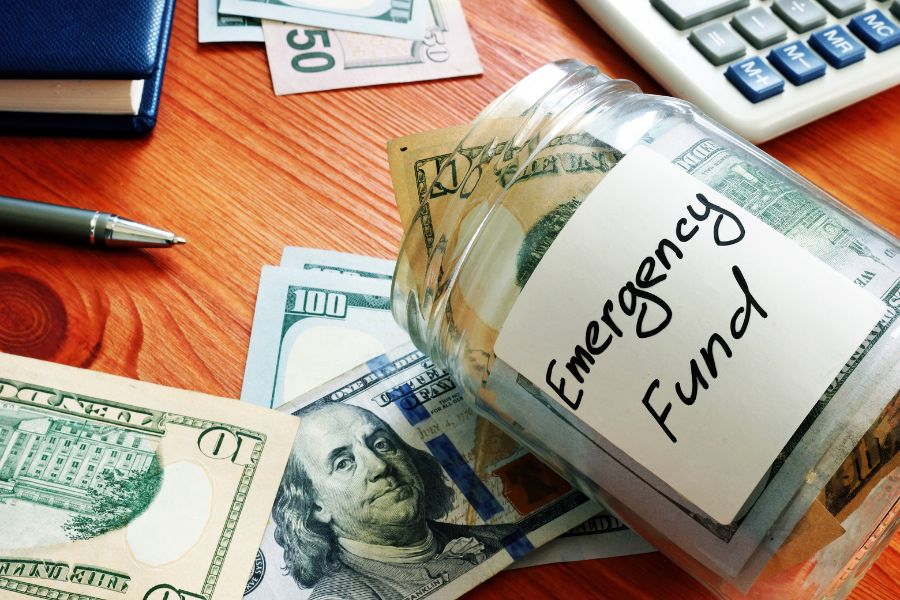
Building a bigger cushion isn’t about paranoia. It’s about facing reality, and in today’s world, $1,000 barely covers a single unexpected bill.
Key Takeaways
- $1,000 won’t cover rent or mortgage in most cities.
- Start with at least one month of living expenses for real emergencies.
- The right fund for you depends on your family, income, and real monthly costs—not a random number.
The Limits of a $1,000 Emergency Fund
Sure, $1,000 is a decent starting line for financial security. But when things get real, that money disappears fast. Most emergencies cost more than $1,000. If you rely on that amount, you’re risking debt.
What $1,000 Can (and Can’t) Cover
I’ve seen $1,000 vanish in a blink. It might help with small stuff like:
What $1,000 Can Cover:
- Minor car repairs ($200–$800)
- Small medical bills or copays
- Emergency vet visits
- Appliance repairs
- Little home fixes
But when the big stuff hits, $1,000 just isn’t enough.
What $1,000 Cannot Cover:
- Major car repairs or a new transmission ($2,000–$5,000)
- Emergency room visits ($1,500–$15,000)
- Replacing an HVAC system ($3,000–$8,000)
- Job loss that lasts more than two weeks
- Dental emergencies that need major work
That gap between what you have and what you need? It’s real, and it shows up fast.
Most of us face bills over $1,000 more often than we’d like to admit.
How Cost of Living and Personal Expenses Change Everything
Where you live and your monthly expenses matter a lot. For example, someone in San Francisco needs a bigger cushion than someone in rural Kansas.

High Cost of Living Areas:
- Rent can hit $3,000+ a month.
- Car repairs are pricier—sometimes 20–30% more.
- Medical bills? Higher too.
Personal Factors That Matter:
- Family size and who depends on you
- Health issues and regular medications
- Age of your car and your home
- How steady your job is
If your monthly expenses are $4,000, $1,000 is just one week’s worth of bills. That’s not much of a safety net.
How One Emergency Can Wipe Out Your Fund
I’ve watched people wipe out their $1,000 fund in one go. The worst part? Now you’ve got nothing left for the next curveball. Picture this: Your car breaks down. It costs $1,200 to fix. You drain your savings and charge the last $200. Now, you’re at zero. The next emergency? Straight onto a credit card. That’s a recipe for a debt spiral.
Common Fund-Draining Emergencies:
- Medical bills: ER visits average $2,200.
- Car trouble: Transmission repairs are about $3,500.
- Home repairs: Water damage cleanup starts at $2,500.
- Pet emergencies: Surgery can easily run $1,500–$5,000.
One bad day shouldn’t erase your progress, but with only $1,000, it’s all too easy.
Where Did the $1,000 Emergency Fund Idea Come From?
The $1,000 emergency fund caught on through popular financial advice, mostly because it felt like an easy first win. This number wasn’t based on studies or deep analysis. It just seemed doable for people drowning in debt.
Dave Ramsey’s Baby Step 1—What’s the Deal?
Dave Ramsey really pushed the $1,000 emergency fund in his “Baby Steps.” He made saving $1,000 the first thing to tackle before attacking debt. The thinking? Give yourself a tiny cushion so you don’t rack up more debt when small emergencies pop up. Ramsey’s advice targets folks already struggling with debt. That $1,000 isn’t supposed to save you from big disasters like job loss or a medical crisis.
The Baby Step 1 Basics:
- Save $1,000—no more, no less.
- Keep it in a simple savings account.
- Only touch it for real emergencies.
- Move on to paying off debt after you hit the goal.
Millions of people found this helpful. It’s simple and gives you a quick win.
Why Did $1,000 Become the Magic Number?
Honestly, $1,000 feels like something most people can actually save. Bigger goals can seem impossible when you’re just starting. Back in the 1990s, $1,000 went a lot further. It could cover more emergencies than it does now.
Back then, $1,000 covered:
- Minor car repairs
- Small medical bills
- Replacing an appliance
- Fixing up little things around the house
The idea wasn’t to be ready for everything—just to stop using credit cards for every little surprise. Many advisors embraced this because it got people saving. Hitting that goal made people feel capable and motivated to keep going.
Social Media Myths and Misconceptions
Social media loves to oversimplify. I see people claiming $1,000 is all you’ll ever need, no matter your income or family.

That’s just not true, and it’s risky advice.
Myths I see all the time:
- $1,000 covers every emergency
- You never need to save more
- It works for everyone, everywhere
- Inflation doesn’t matter
A lot of folks don’t realize $1,000 is just a starting block. The real plan is to build up more once you pay off debt. Here’s a stat that gets thrown around: 59% of Americans can’t cover a $1,000 emergency. Some people twist that to mean $1,000 is enough, but it really shows how unprepared we are.
Social media spreads these myths way faster than the original, more nuanced advice.
What You Really Need for a Solid Safety Net
Most experts now say you should aim for an emergency fund that covers three to six months of essential expenses. Your number will depend on your monthly costs, how steady your income is, and who relies on you.
How to Figure Out Your Ideal Emergency Fund
Start with your monthly must-haves: rent or mortgage, utilities, groceries, insurance, and minimum debt payments.
Include These Essentials:
- Housing (rent/mortgage, utilities)
- Food and groceries
- Transportation (car payment, gas, insurance)
- Insurance premiums (health, life, disability)
- Minimum debt payments
- Basic phone and internet
Multiply that monthly total by three to six. If your essentials add up to $3,000, you’ll want $9,000 to $18,000 tucked away. I like using gross expenses, not just what’s left after taxes. That way, you get a clearer picture of what you really need to keep life running.
Why Three to Six Months’ Expenses Matter
Three to six months of expenses can keep you afloat during tough times. We’re talking job loss, big medical bills, or major repairs—stuff that would otherwise send you straight into debt.
Why Three Months is the Floor:
- Job hunts often last 3–5 months.
- Unemployment checks rarely cover everything.
- Medical bills can drain savings fast.
- Big repairs almost always cost more than $1,000.
Six months is safer, especially if your job isn’t stable or your income fluctuates. If you’ve got kids or only one income, I’d lean toward the higher end. Keep your emergency fund separate from other savings. It’s too tempting to dip in otherwise.
Single vs. Dual Income Households—What’s Different?
If you’re the only earner, you need a bigger emergency fund. I suggest saving six months’ worth of expenses.

Single-Income Households:
- Shoot for 6+ months of expenses.
- Make disability insurance a priority.
- You’re at higher risk if your income stops.
Dual-Income Households:
- Save 3–6 months, depending on job security.
- You might lean on your partner’s income if one of you loses a job.
- If both of you work in the same field, save more—risk doubles.
Even with two incomes, if you both work in shaky industries, aim high. Your fund should protect you if both jobs are on the line at once.
How to Grow Beyond $1,000 (Without Losing Your Mind)
Moving from $1,000 to a real emergency fund takes a plan. Here’s how I—and plenty of others—made it work without feeling totally deprived.
Save While You’re Paying Off Debt
You don’t have to pick between saving and paying down debt. I like to split any extra money between both.
Try the 50/50 Split
Let’s say you have $200 left after bills. Put $100 toward debt, $100 into savings.
This way, you see progress on both fronts. Debt drops, savings rise.
Set Mini-Goals
Aim for $1,500, then $2,000. Smaller steps feel doable and keep you motivated.
Attack High-Interest Debt First
Always pay minimums on all debts. Any extra goes to the highest interest rate.
Your emergency fund keeps you from piling on new debt when life happens. That actually speeds up the debt payoff process.
Budgeting When Every Dollar Counts
If you’re living paycheck to paycheck, start small.
Track Every Dollar
Write down everything you spend for a week. You’ll spot leaks—coffee runs, forgotten subscriptions, random snacks.
The $5 Challenge
Every time you get a $5 bill, stash it. You could save $50–$100 a month without much pain.
Cut One Thing
Pick a subscription or habit and trim $20–$30 a month. Set up an automatic transfer for that amount straight into savings.
Use the 24-Hour Rule
Wait a day before making any purchase over $25. You’ll dodge a lot of impulse buys, and that money can go straight to your emergency fund.
Save Windfalls
Tax refunds, bonuses, birthday cash—send it to your emergency fund before you even think about spending it.
Selling Stuff: Turn Clutter Into Cash
Your house is a goldmine of unused things. I’ve helped friends clear $500–$2,000 just by selling things collecting dust.

Start With Big-Ticket Items
Electronics, tools, jewelry, exercise gear—these move fast and bring in real money.
Try Different Platforms
- Facebook Marketplace for local buyers
- eBay for collectibles and gadgets
- Poshmark for clothes and accessories
- OfferUp for furniture or bulkier stuff
Price to Move
Set your price about 20% under retail. It’s better to get cash fast than wait for a perfect offer.
Host a Group Garage Sale
Team up with neighbors. More stuff means more shoppers and bigger sales.
Sell in Season
List Christmas stuff in November, summer clothes in spring, winter gear in fall. You’ll get better prices.
And don’t blow that cash—send it straight to your emergency fund. That’s how you turn clutter into real security.
Choosing the Right Savings Account
Let’s be honest—your emergency fund should make you a little money while staying easy to grab when life gets wild. Regular savings accounts barely pay any interest at all, so they’re not doing you any favors.
High-Yield Savings Accounts
High-yield savings accounts? Game-changer. They usually pay 15 to 20 times more interest than the old-school savings accounts at big banks. I’ve found that online banks like CIT Bank tend to offer some of the best rates out there.
Key Features to Look For:
- No monthly fees
- No minimum balance requirements
- Easy online transfers
- FDIC insurance protection
Avoid These Account Types:
- CDs (your money gets locked up for months or years)
- Investment accounts (the value bounces up and down)
- Checking accounts (way too tempting to spend)
Set Up Automatic Transfers
I always set up automatic transfers to move money into my high-yield savings account every payday. Even just $25 a week? That’s $1,300 by the end of the year, and you barely notice it missing. Keeping your emergency fund in a different bank than your checking account helps a ton. That little bit of friction keeps you from dipping into it for random stuff that isn’t a real emergency.
The interest you earn might not make you rich, but it does help your emergency fund grow faster—and you don’t have to lift a finger.
Frequently Asked Questions
People ask me all the time if $1,000 is enough for emergencies, or how to actually build a safety net that works. I’ve wondered the same thing, honestly.
What are the risks of only having a $1,000 emergency fund?
A $1,000 emergency fund just doesn’t stretch very far. Most car repairs for older vehicles? They’ll easily run you $1,500 to $3,000. That’s not even counting the pain of an emergency room visit, which can blow past $2,000 even if you have insurance.
If you’re stuck with a high-deductible health plan, brace yourself for $5,000 or more in out-of-pocket costs. Homeowners know that a water leak or busted furnace can set you back $3,000 to $8,000.
When your fund runs out, you’ll probably reach for credit cards or loans. Suddenly, you’re in debt again, paying off emergencies while juggling your regular bills. That kind of stress can really shake your confidence in your financial plan.
How much should my emergency fund be for optimal financial security?
I usually tell people to start with $2,500 to $4,000 if you’re still working on paying off debt. That covers most “oh no” moments without tying up too much cash.
Once you’re debt-free, aim for a full emergency fund—3 to 6 months of living expenses. If your monthly bills are $4,000, that’s $12,000 to $24,000 for real peace of mind.
If your income is unpredictable or you’ve got health issues, think bigger. Six to twelve months of expenses makes sense. Single-income households should also play it safe and save at the higher end.
What factors should I consider when determining the size of my emergency fund?
Family size matters a lot. I add at least $100 for every person in the house besides myself. Pets? They’re family too, and vet bills sneak up—so I throw in an extra $100 per pet.
Health insurance deductibles are a big deal. If your deductible is $3,000, make sure your fund can cover it. If someone in the family has health issues, I’d add another $500 just in case.
Older cars can be money pits. If your ride is more than seven years old, set aside an extra $500 for repairs.
Owning a home means surprise expenses. Houses over ten years old love to throw curveballs. And if your job isn’t super secure, you’ll want to pad that fund even more.
Can a larger emergency fund save me money in the long run?
Absolutely. A bigger emergency fund keeps you out of the debt trap. Paying cash for emergencies means you skip those nasty 18% to 25% credit card interest rates. That saves you hundreds, sometimes thousands.
With cash on hand, you can shop around for better deals on repairs. No need to accept the first sky-high quote because you’re desperate. Some places even offer discounts if you pay in cash.
You won’t have to raid your retirement accounts either. Early 401k withdrawals come with a 10% penalty and taxes, so a $3,000 emergency might actually cost you $4,000 or more.
Higher deductibles on insurance become less scary when you’ve got a solid emergency fund. You can pick plans with lower premiums and save money every month.
What are the best strategies to grow my emergency fund beyond $1,000?
Start by cutting one big expense for a while. Maybe cancel a streaming service, cook at home more, or hit pause on your gym membership. Every dollar you save goes straight into your emergency fund.
Look around your house for stuff to sell. Old electronics, unused furniture, and clothes you never wear can add up fast. I’ve made $500 to $1,500 just by selling things on Facebook Marketplace and at garage sales.
Picking up a side hustle helps too. Deliver food, freelance, or take on a gig for a few months. Even $200 extra per month gets you to $3,000 in under a year.
Set up automatic transfers of $50 to $100 every paycheck. It’s amazing how quickly your savings grow when you don’t have to think about it. Use a high-yield savings account so your money earns a little interest while it sits there, waiting for whatever life throws your way.
Why is it important to personalize my emergency fund amount?
Let’s be real—your life isn’t a one-size-fits-all situation. The risks you face are unique, and honestly, generic advice can’t possibly cover every scenario. For example, a family dealing with medical conditions has a completely different set of expenses than a couple of healthy young adults just starting out.
If you live out in the country, you might find yourself forking over more cash for car repairs just because your commute is longer. City folks? Maybe not so much, but they’ve got their own pricey surprises.
Now, let’s talk about comfort zones. If having just $1,000 in your emergency fund keeps you up at night, it’s pretty tough to stick with your bigger financial goals. I’ve seen people give up on debt payoff plans because their emergency fund felt too thin. Finding that sweet spot for your emergency stash can keep you motivated and on track.
Income stability plays a huge role too. If you freelance or work on commission, you know those paychecks can be unpredictable. You’ll probably want a bigger cushion than someone with a government job and a steady paycheck. Seasonal workers? It just makes sense to stash away more during your busy months.
Where you live matters, too. Cities usually hit you with higher medical bills and repair costs. Out in the sticks, you might spend more on keeping your car running, but maybe less on things like housing emergencies.
I guess the bottom line is this: your emergency fund should fit your life, not someone else’s.
