

Grocery prices have shot up by about 25% since 2020. If you’re like me, you might be staring at receipts and wondering how anyone manages to keep food on the table without blowing through their budget. Most families I know spend anywhere from $600 to $800 each month on groceries. But some clever folks have figured out how to cut that number way down—without giving up nutrition or the joy of eating.
So, how do you actually feed a family of four for just $200 a month? It really comes down to six habits: doing weekly food inventories, planning meals with intention, snapping up loss leaders, hunting for markdowns, buying in bulk, and skipping processed foods. I’ve seen these tricks help people slash their grocery bills by 60-70%, and they still get to eat tasty, healthy meals all month long.

I won’t lie—it takes a shift in how you shop and plan meals. But once you get into the groove, you might be surprised at how much you save. No need for crazy couponing or specialty stores. This strategy works for pretty much any diet, and it doesn’t feel like deprivation at all.
Key Takeaways
- Planning meals around what’s on sale and what you already have can cut your grocery bill by more than half.
- Chasing markdowns and loss leaders makes the biggest dent in your monthly spending.
- Cooking from scratch and ditching processed foods saves money and boosts nutrition.
Core Principles of the $200 Grocery Strategy
Let’s break it down. The $200 grocery plan rests on three main pillars: set a real monthly budget, know exactly what your budget covers (and what it doesn’t), and tweak things for your family’s unique needs.
Setting a Realistic Grocery Budget
Cutting your grocery spending to $200 for four people isn’t something you just jump into overnight. The USDA says most families shell out $890 to $1,370 every month, so $200 is a serious drop.
Start by trimming your spending by 10-15% each month. It’s a lot easier to stick with gradual changes than going cold turkey on your favorite foods.
Weekly Budget Breakdown:
- Week 1: $50
- Week 2: $50
- Week 3: $50
- Week 4: $50
Stick to these weekly limits and track your spending as you go. I find it helps to check in daily—otherwise, it’s easy to lose track.
For bulk deals, use the one-fifths rule. Set aside $40 (20% of your budget) for stocking up on killer markdowns or bulk buys.
Defining What the Budget Covers
If you don’t draw clear lines, it’s way too easy to overspend. The $200 budget? It covers only food—nothing else.

What Goes In the Budget:
- Fresh produce and fruit
- Meat, poultry, fish
- Dairy and eggs
- Pantry basics and spices
- Frozen and canned foods
What Stays Out:
- Cleaning stuff and detergents
- Toiletries and personal care
- Pet food
- Takeout and restaurant meals
- Paper goods and household products
I used to lump everything together and wondered why my grocery budget always exploded. Splitting food and non-food into separate budgets made a world of difference.
Adjusting for Dietary Needs and Preferences
No two families eat exactly the same. If you’re plant-based, that $200 goal might be easier. If your crew loves meat, you’ll have to get creative.
Budget-Friendly Dietary Hacks:
If food allergies are an issue, stick to naturally gluten-free or allergen-free basics—think rice, beans, and fresh veggies. They’re way cheaper than packaged specialty foods.
For big appetites (hello, teenagers), focus on filling, affordable staples like potatoes, oats, and pasta. These keep everyone full without breaking the bank.
Love international flavors? Buy whole ingredients and make dishes from scratch instead of splurging on pre-made ethnic foods.
If you have medical dietary needs, try to find affordable options that still fit your health requirements. Specialty products can get pricey fast.
Grocery Shopping Tactics for Maximum Savings
You can chop your grocery bill by 40-60% if you shop smart. It comes down to choosing the right stores, knowing when to shop, and understanding how sales work.
Shopping at Walmart and Kroger
I often hit up Walmart for staples. Their prices usually beat the competition by 10-15%. The Great Value brand is surprisingly good and costs 20-30% less than name brands.
You can use their price matching policy by showing competitor ads. No need to drive all over town for deals.
Kroger is my go-to for digital coupons and fuel rewards. Their app makes it easy to load up savings, and the weekly sales can be massive—sometimes 40-50% off.
The “Buy 5, Save $5” deal is a favorite. You can mix and match products and still get the discount.
Both stores offer pickup, which helps avoid those impulse buys that sneak an extra $20 or $30 onto your bill.
Mastering Store Sales and Loss Leaders
Stores use loss leaders—super cheap items—to get you in the door. Stuff like $0.88/lb chicken or $1 butter pops up on the front page of weekly ads.
I make quick trips just for these deals and skip the full-priced stuff.
Sales cycles usually repeat every 6-12 weeks:
- Pasta and canned goods: 8 weeks
- Cleaning supplies: 10 weeks
- Frozen foods: 6 weeks
- Personal care: 12 weeks
I track my favorite items and stock up when prices hit rock bottom.
Timing Your Trips for Markdowns
Stores mark down perishables on a pretty regular schedule. Morning markdowns usually happen between 7-9 AM, right when staff want to clear out stuff expiring that day.
Meat gets discounted by 50% as it nears the sell-by date. I grab these deals and freeze what I won’t use right away.

Bakery markdowns are best in the late afternoon or evening. Day-old bread and pastries often get marked down 30-70%.
Produce markdowns depend on the store, but I usually see them:
- Monday mornings (after weekend rush)
- Wednesday afternoons (mid-week restock)
- Friday evenings (prepping for weekend shoppers)
I always check the markdown section first and plan meals around whatever proteins and produce are discounted.
Planning Meals to Optimize Your Budget
Meal planning is the real secret sauce. It can cut grocery costs by up to 40%, and you still get to eat well. The trick? Build your meal plans around what you already have and what’s on sale.
The Importance of a Custom Meal Plan
Generic meal plans rarely work for real families. I start by listing 15-20 meals everyone actually likes—nothing fancy, just stuff like chicken and rice, spaghetti, or bean chili.
Pick ingredients you can use in lots of ways. Chicken thighs can go into tacos, soups, or roasted with veggies. Ground beef works for tacos, pasta, and casseroles.
I always check the sales before finalizing my plan. If chicken’s on sale, we eat more chicken that week. When beef drops in price, I switch things up.
A monthly rotation of 30 meals keeps things interesting without overcomplicating life. We repeat favorites, and no one complains.
Organizing a Weekly Perishable Inventory
I take a quick inventory every week or two. Skipping this step leads to buying doubles and tossing out food—wasteful and expensive.
Check these spots:
- Fridge shelves and drawers
- Freezer sections
- Pantry shelves
- Produce bins
Jot down what needs to be used up soon, and plan meals around those items.
Store produce right—bananas away from other fruits, berries washed just before eating, potatoes in a dark spot away from onions.
Follow the “first in, first out” rule. Put new groceries behind the old ones, so nothing gets lost and forgotten.
How to Use Reverse Meal Planning
Reverse meal planning changed the game for me. Instead of picking recipes first, I start with what I already have.
I scan the pantry, freezer, and fridge, then list out proteins, veggies, grains, and canned goods that need to go.
Then I build meals around those. Found chicken thighs, rice, and canned tomatoes? Boom—chicken and rice with tomato sauce is dinner.
Aim for 60% of meals using what you already own. Only plan to buy the rest. This keeps your grocery list and spending in check.
I like making a simple chart: protein, starch, veggie. Match up what you have for easy, complete meals.
Essential Foods and Sample Groceries List
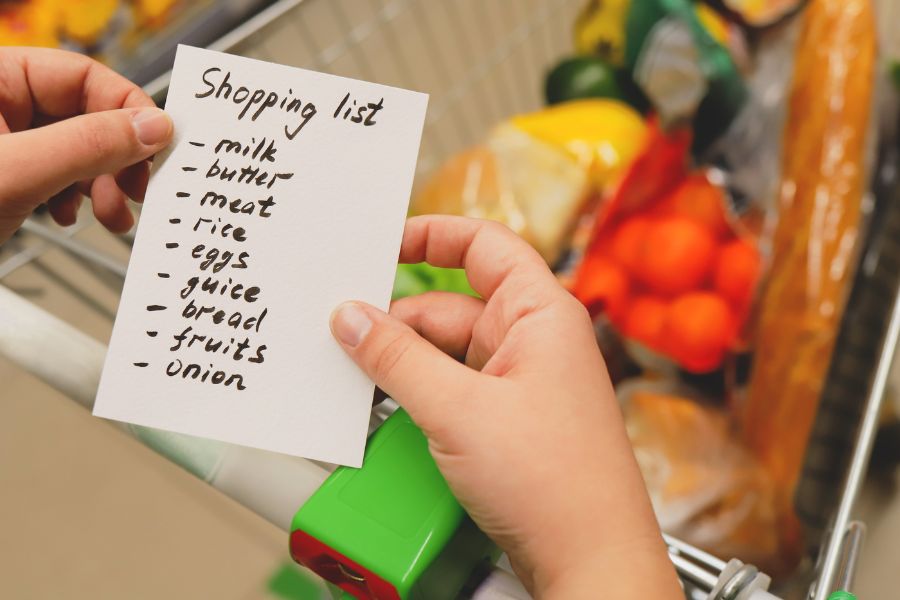
If you want to make $200 stretch, focus on versatile basics. Buy proteins like chicken thighs, filling carbs like rice and potatoes, and produce that keeps.
Budget-Friendly Proteins: Chicken Thighs, Tuna, and More
Chicken thighs are my top pick—cheaper than breasts, tastier, and stay juicy. Twenty pounds cost about $17 and can last weeks if you freeze them.
Canned tuna is a lifesaver for quick lunches like tuna salad or casseroles. One can easily feeds two people.
Eggs are a breakfast staple, great for baking and even dinner. Four dozen cost around $12 and last us most of the month.
Ground beef goes further when you mix it with rice or pasta. Three pounds cover tacos, pasta sauce, and casseroles.
| Protein Source | Cost | Meals It Makes |
|---|---|---|
| Chicken thighs (20 lbs) | $17 | 15-20 dinners |
| Ground beef (3 lbs) | $9 | 6-8 meals |
| Eggs (4 dozen) | $12 | 20+ breakfasts |
Affordable Staples: Rice, Potatoes, and Bread
Rice is dirt cheap and filling. One bag lasts for weeks as a side or main.
Potatoes are super flexible—breakfast, lunch, dinner. Five pounds cost about $2.27 and can become mashed potatoes, baked potatoes, or hash.
Bread freezes well. Four loaves for $6 cover sandwiches and toast all month.
Spaghetti and pasta make hearty meals with just a simple sauce. Two packs cost $2 and serve up four big dinners.
Oatmeal is my go-to breakfast. Three packs for $6 get you through the mornings and double as a baking ingredient.
Fresh Produce and Simple Snacks
Apples keep for ages if you store them right. Six pounds for $6 make great snacks, especially with peanut butter.
Bananas are usually under $3 for six pounds. They’re perfect for breakfast, snacks, and baking.
Cabbage lasts weeks and costs just $2 for four pounds. It works in coleslaw, soups, and stir-fries.
Carrots and cucumbers are crunchy, last longer than lettuce, and are cheap. Two bags of carrots run $3, and five cucumbers cost $4.50.
Microwave popcorn gives you 24 bags for $7. It’s a cheap snack my kids never get tired of.
We keep snacks simple—animal crackers for $3.64, and homemade oatmeal cookies hit the sweet spot without costing much.
Meal Ideas and Recipes for Affordable Family Dinners
With a handful of basic ingredients—ground turkey, eggs, rice, potatoes—you can whip up filling dinners, fresh salads, and even sweet treats. I love how these simple staples can become hearty meals that cost just a couple bucks per serving. It doesn’t have to be fancy to be delicious or budget-friendly.
Easy Dishes With Minimal Ingredients
Let’s be honest, spaghetti with ground turkey is a weeknight lifesaver. I’ll cook up a pound of pasta, brown a pound of ground turkey with some garlic and onions, then toss in a can of diced tomatoes and a sprinkle of Italian seasoning. It’s a budget dinner that never lets me down.
Tuna casserole? Oh, it’s classic and shockingly cheap. I mix two cans of tuna with cooked egg noodles, frozen peas, and a quick white sauce—just butter, flour, and milk. That’s dinner for four, easily under $5.

Rice bowls are my secret weapon for stretching protein. I’ll cook two cups of rice, scramble up some eggs, and toss in whatever frozen veggies I have. A dash of soy sauce, and I’ve got multiple meals ready to go.
Egg dishes work any time of day. Frittata’s my go-to: eight eggs, diced potatoes, and frozen veggies. Into the oven at 350°F for half an hour, and I call it brunch—or dinner, honestly.
Lentil soup is so cheap it feels like cheating. I simmer a cup of dry lentils with diced carrots, onions, and canned tomatoes. Garlic powder and herbs make it cozy, and each bowl costs pennies.
Simple Sides and Salads
Garlic bread just makes pasta night better. I mash butter with minced garlic, slather it on sliced bread, and bake until golden. The smell alone is worth it.
Cabbage salad is my crunchy, affordable fix. I shred half a head of cabbage, toss with oil, vinegar, salt, and pepper. Sometimes I’ll add shredded carrots for a pop of color.
Baked potatoes fill you up for almost nothing. I poke them with a fork, microwave for about 9 minutes, then load them with cheese or a pat of butter.
Rice pilaf sounds fancy but is just rice sautéed in a little oil before adding water. Somehow, it always comes out fluffy and full of flavor.
Roasted veggies are my answer to “what’s on sale?” I chop carrots, potatoes, onions—whatever I’ve got—toss with oil, and bake at 400°F for half an hour. Easy and satisfying.
Delicious Desserts Without Breaking the Bank
Oatmeal cookies are ridiculously simple. I mix flour, oats, butter, sugar, and eggs, then bake at 350°F for about 12 minutes. They disappear fast.
Homemade cakes beat store-bought every time, in my opinion. A basic yellow cake just needs flour, sugar, eggs, oil, and baking powder. I mix wet and dry ingredients separately, then bring it all together.
Fruit crisps are my favorite way to use up apples or whatever fruit’s in season. I top sliced fruit with oats, flour, brown sugar, and butter, then bake until bubbly.
Rice pudding is my trick for leftover rice. I simmer it with milk, sugar, and cinnamon until it’s creamy and comforting.
Peanut butter treats? Just mix peanut butter with powdered sugar, roll into balls, and chill. They’re a sweet fix when I need one.
Tips for Staying on Track Month After Month
Sticking to a tight grocery budget isn’t always easy. I’ve learned that managing leftovers and rolling with special occasions can make all the difference. With a little planning, families can actually enjoy treats and still keep spending under control.
Dealing With Food Waste and Leftovers
Food waste can wreck a budget fast. At $200 a month, I just can’t afford to let produce go bad or forget about leftovers lurking in the fridge.
I always plan leftover meals from the start. If I roast chicken on Sunday, I’ll use it for sandwiches on Tuesday and soup on Thursday. One chicken, three meals.
I wash and cut veggies right after shopping. Storing them in clear containers helps everyone see what’s available, so nothing gets ignored.
When bananas start to brown, I freeze them for smoothies. Extra bread? Straight to the freezer for toast later. Even cooked rice freezes well for future stir-fries.
I use the “first in, first out” rule. New groceries go behind the old ones in the fridge and pantry. This way, nothing gets lost or spoiled.
Every Thursday is leftover night. We clean out the fridge, waste less, and I get a break from cooking.
Making Small Adjustments for Special Occasions
Special occasions can really test your budget discipline. I set aside $20-30 every month for birthdays, holidays, or a little celebration.
Homemade treats make celebrations feel special without spending a fortune. I’ll bake birthday cakes myself and jazz them up with colorful frosting.
For holidays, I tweak regular meals—like tossing cranberries into stuffing or using cookie cutters to make festive cookies. Little changes go a long way.

After holidays, I hunt for sales. Discounted canned pumpkin in November? I’ll grab a few for next year.
Hosting a get-together? Potluck style is the way to go. I ask friends to bring sides or desserts, so the cost (and the fun) gets shared.
Frequently Asked Questions
People ask me all the time how I manage to stretch grocery dollars and still put healthy meals on the table. Here are some of the most common questions I hear, along with a few tricks I’ve picked up along the way.
What are some essential items to include in a $200 monthly grocery list for a family of four?
Rice, beans, and pasta are the backbone of my budget list. They’re filling, cheap, and you can make endless meals with them for under $2 a pound.
Potatoes, onions, and carrots last for weeks. I use them in soups, stews, or as hearty sides.
Eggs are a staple—about $3 a dozen and so versatile. Breakfast, lunch, dinner—eggs just work.
Canned tomatoes and frozen veggies are always on my list. They’re affordable, don’t spoil quickly, and pack in plenty of nutrition.
Oats are my go-to for breakfast. One big container lasts weeks and costs less than $4.
How can you plan a menu to feed a family of four for $100 a week while maintaining a balanced diet?
I plan meals around loss leaders—the weekly sales. If chicken thighs or ground turkey are on sale, that’s what we eat.
I try to use sale items in three or four different meals. If broccoli’s cheap, I’ll make stir-fry, soup, and casseroles with it.
Instead of planning every meal by day, I list out mains, sides, and soups, then mix and match as the week goes on.
Reverse meal planning works wonders. I look at what I already have and plan meals around those ingredients first.
When I batch cook, I double recipes and freeze half. It saves time and helps me avoid pricey takeout on busy nights.
What tips can help save money on groceries for a household of four without compromising nutrition?
I always check the markdown sections. Produce, meat, and dairy can be 30-60% off if you shop at the right time.
I ask store employees when markdowns happen, then plan my trips around those times.
Buying whole foods instead of pre-cut or processed options saves a ton. Whole veggies are way cheaper than chopped ones.
I buy rice, beans, and other staples in bulk. Setting aside part of my budget for bulk trips saves 35-50% on non-perishables.
Even in a small apartment, I grow herbs or lettuce on my windowsill. Fresh greens for pennies!
What is the average cost of groceries for a family of four in 2025, and how can you stay below this while shopping?
In 2025, the average family of four spends $800-1200 a month on groceries. Prices have jumped 25% since 2020, and meat’s even worse.
To keep it under $200, I skip convenience foods and restaurant meals. Cooking from scratch is so much cheaper.
Discount grocery stores and ethnic markets are my secret for lower prices. Sometimes, the same products cost 20-40% less than big chains.
I use store apps and digital coupons for extra savings. App-only deals can really add up.
Tracking spending weekly keeps me honest. If I stick to $50 a week, I stay on budget.
How can a family of four strategize their grocery shopping to meet all their dietary needs on a $200 budget?
Every week, I make a quick inventory of what’s perishable. Listing foods by expiration date helps me use them up before they spoil.
I use the one-fifth method: 20% of my monthly budget goes to stocking up on great deals. This way, I’m ready when big sales hit.
Cutting expenses slowly works better than going cold turkey. Dropping spending by 10% each month makes the transition easier for everyone.
I plan meals around what’s in season. In-season produce is fresher and often costs half as much.
Getting to know store employees pays off. They’ll tip me off about upcoming sales or markdowns, and that inside info leads to better deals.
How to minimize food waste when budgeting $200 per month for groceries for a family of four?
Let me be honest—if you want to keep your grocery bill under $200 for a family of four, you’ve got to get creative. First up, I always check what’s already in my fridge, freezer, and pantry before I even think about shopping. It’s wild how often I find stuff I forgot I had.
Take a few minutes every week to do a quick inventory. You’ll dodge buying doubles and save a surprising amount of cash.
Next, try planning out three days’ worth of meals with what you’ve already got. Trust me, you’ll probably discover enough ingredients to skip a grocery run or two. It feels great to use up those odds and ends.
Proper storage matters more than you might think. Toss herbs in a jar of water, and stash potatoes somewhere dark—that alone can keep them fresh way longer.
Leftovers? Don’t let them go to waste. I love turning yesterday’s roasted chicken into soup, sandwiches, or even a quick casserole. It’s like a little game to see what new dish I can come up with.
If you’ve cooked extra, freeze it right away. Pop a label with the date and what’s inside on the container. You’ll thank yourself later when you find a ready-made meal waiting.
