

When I started house hunting, everyone around me insisted I needed to save up 20% for a down payment. Honestly, that advice felt overwhelming. It made homeownership look totally out of reach. After months of digging into research and chatting with lenders, I stumbled on a truth that changed everything for me.
You don’t actually need 20% down to buy a home. Most first-time buyers put down just 6-8%. Plenty of loan programs accept as little as 3%, and some even require zero down. That 20% rule? It’s more of a guideline than a hard requirement.

Sure, putting down 20% helps you skip private mortgage insurance, but it’s definitely not the only way to get your foot in the door. In the end, I went a different route than the classic 20% down payment, and honestly, it fit my life so much better. My decision came down to weighing the pros and cons of locking up my cash versus keeping money available for other goals and emergencies.
Key Takeaways
- Most buyers put down far less than 20%. First-timers usually land in the 6-8% range.
- Lower down payments mean you’ll pay PMI, but you get to keep more cash for emergencies or investing.
- The best down payment? It depends on your actual finances—not some one-size-fits-all rule.
Understanding the 20% Down Payment Rule
The 20% down payment has become this gold standard in real estate.
But a lot of first-time homebuyers don’t realize it’s just a guideline, not a requirement.
Most people actually put down much less. First-timers average just 6-8%.
What Is a Down Payment?
A down payment is the upfront cash you pay when buying a home.
This money comes straight from your savings and shrinks the amount you need to borrow.
It tells lenders you’re financially serious and gives you immediate equity in your new place.
Most down payments fall between 3% and 20% of the home’s price.
If you’re eyeing a $300,000 house, you could put down anywhere from $9,000 to $60,000.
What you need to know about down payments:
- The money needs to come from your own funds or eligible gifts.
- You pay it at closing, not monthly.
- It creates instant equity in your property.
- It affects your loan terms and monthly payments.
Where Did the 20% Benchmark Come From?
The 20% rule started back in the day with traditional lending.
Banks wanted borrowers to have real skin in the game, so they required 20% to avoid private mortgage insurance (PMI) and minimize their risk. Decades ago, this made sense—lending options were limited. Banks wanted to protect themselves before saying yes to a mortgage.

But today? There are way more choices. Government-backed loans like FHA let you put down as little as 3.5%. VA loans for military members? Zero down. The 20% rule stuck around out of habit, but most loans don’t need it anymore.
Lenders now accept much smaller down payments with the right insurance.
Myths and Misconceptions
Biggest myth: You have to put 20% down to buy a home.
That’s just not true for most loans out there.
Reality: Private mortgage insurance (PMI) lets you buy with less. Sure, it adds to your monthly costs, but it means you can buy sooner instead of waiting years.
Another misconception: Smaller down payments mean you’ll get rejected.
Actually, tons of first-time buyer programs are designed for people who don’t have a big pile of cash.
The waiting game myth: Some people say you should wait until you have 20% saved.
But honestly? Home prices often climb faster than you can save, so waiting could cost you more.
| Myth | Reality |
|---|---|
| Need 20% to qualify | Many loans accept 3-5% down |
| PMI is always bad | PMI lets you buy sooner |
| Small down = rejection | Programs exist for low down payments |
Typical Down Payments for First-Time Homebuyers
First-time buyers usually put down a lot less than 20%.
Recent data shows the median is around 6-8%.
Common down payment minimums:
- FHA loans: 3.5%
- Conventional loans: 3-5% for qualified buyers
- VA loans: 0% for eligible veterans
- USDA loans: 0% in certain rural areas
Repeat buyers tend to put down 10-15%, but even that’s rarely 20%.
The real trick? Find the balance between your down payment and what you can actually afford each month.
Many first-time buyer programs offer help—down payment grants, reduced rates, or help with closing costs.
My take: Focus on what works for your budget.
Don’t get stuck chasing some magic 20% number. Getting into a home sooner usually beats waiting forever to save more.
20% Down vs. Less: Pros and Cons
Putting 20% down definitely comes with perks—like skipping PMI and locking in better interest rates.
But putting down less can help you buy sooner and keep more cash in your pocket.
Benefits of a 20% Down Payment
When you put 20% down, you dodge private mortgage insurance (PMI). That typically saves you hundreds every month. A bigger down payment also shrinks your monthly mortgage payment since you’re borrowing less.
Buy a $400,000 home and put $80,000 down instead of $20,000? That’s about $300 less each month. Lenders might give you a lower interest rate for 20% down. Even a 0.25% drop can save you thousands over your mortgage.
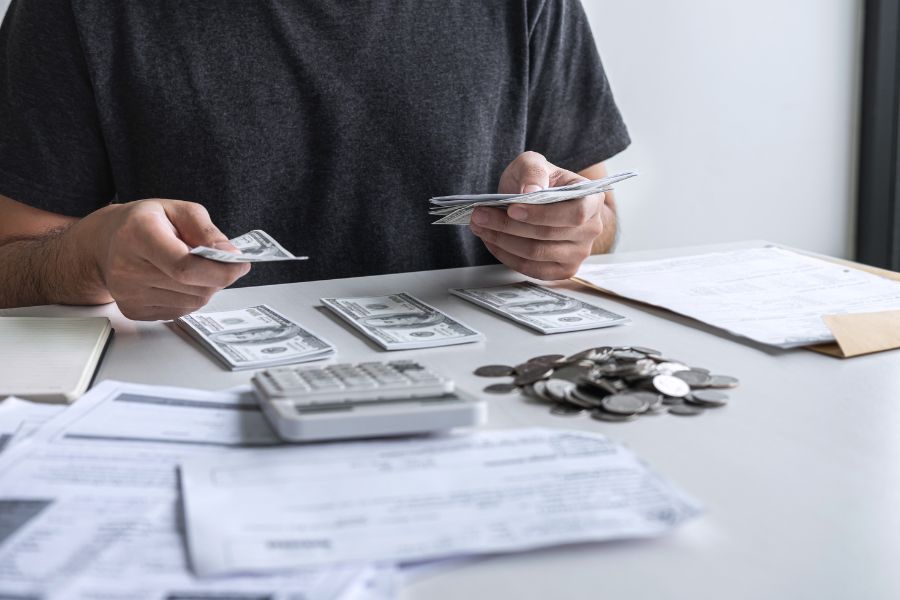
You build instant home equity with a big down payment. That equity protects you if home values dip and gives you more options down the road. Your offer looks stronger to sellers, too. It shows you’re financially solid and less likely to have financing fall through.
Drawbacks of a Large Down Payment
Saving up 20% takes most people years.
Meanwhile, home prices might rise faster than you can save, making it even tougher to buy later.
A big down payment ties up your cash.
What if you need that money for emergencies or repairs? Most experts say you should keep 3-6 months of expenses in savings after buying.
You also lose out on investing that money elsewhere.
If the stock market could earn you 8% but your mortgage rate is 6%, maybe it’s smarter to keep more cash invested.
Go too big on your down payment and you risk being “house poor.”
No cash left for furniture, repairs, or upgrades. New homeowners spend nearly $15,000 a year on unexpected costs.
Advantages of Putting Less Than 20% Down
You can buy a home years sooner with a smaller down payment.
That means you start building equity through your payments instead of throwing money at rent.
Many loan programs only need 3% to 5% down.
VA loans? 0% down. FHA loans? 3.5%. Conventional loans? As low as 3%.
Keeping more cash in savings gives you a financial safety net.
You’re ready for surprise repairs or job loss without tapping your home equity.
You can invest the extra money in retirement accounts or other assets.
Sometimes the returns beat what you’d save by avoiding mortgage insurance.
Lower down payments also open the door to better neighborhoods or a nicer home than you could afford with 20% down.
Potential Risks of Lower Down Payments
If you put down less than 20% on a conventional loan, you’ll pay PMI.
That can add $200-500 to your monthly payment, depending on your loan balance and credit score.
Your monthly mortgage payment will be higher since you’re borrowing more.
That can squeeze your budget and make things tight.
You build equity slower with a small down payment.
If home values drop, you could end up owing more than your house is worth.
Lenders might charge you a higher interest rate for a smaller down payment.
That means you’ll pay more in the long run.
And, let’s be real, sellers often prefer buyers with bigger down payments.
It makes your offer look stronger and less risky.
How Down Payment Size Impacts Loans and Costs
Your down payment changes three big things in your mortgage: insurance, interest rates, and your monthly payments.

The bigger your down payment, the less you’ll pay each month and over the life of your loan.
Mortgage Insurance and PMI Explained
When I put down less than 20% on my conventional loan, I had to pay Private Mortgage Insurance (PMI).
That’s what protects the lender if I stop making payments.
PMI usually costs between 0.3% and 1.5% of your loan balance each year.
For a $300,000 loan, that’s $900 to $4,500 a year.
PMI by Loan Type:
- Conventional loans: Required with less than 20% down
- FHA loans: Required no matter how much you put down
- VA loans: No mortgage insurance at all
- USDA loans: Guarantee fees instead of traditional PMI
Your credit score and down payment size affect your PMI rate.
Higher scores and bigger down payments mean lower PMI costs.
The good news? With conventional loans, PMI drops off automatically when you hit 20% equity.
With FHA loans, mortgage insurance usually sticks around for the life of the loan.
Down Payment Effect on Interest Rates
Put more money down, and lenders tend to reward you with better interest rates.
A 20% down payment usually gets you the best rates out there.
The difference can be bigger than you think.
Someone with 5% down might pay 0.25% to 0.5% more than someone with 20%.
Rate Examples:
- 3% down: Higher rate
- 10% down: Mid-tier
- 20% down: Best rates
This goes for both fixed-rate and adjustable-rate mortgages.
Even a 0.25% difference adds up.
On a $250,000 loan, that’s about $13,000 more in interest over 30 years.
Some folks choose to save up longer for a bigger down payment just for this reason.
Loan Balance and Monthly Payments
Your down payment shrinks your loan balance and your monthly payment.
Borrow less, pay less—simple as that.
A bigger down payment affects several parts of your housing cost:
Monthly Payment Breakdown:
- Principal and interest: Lower with a bigger down payment
- PMI: Gone with 20% down on conventional loans
- Property taxes: Same, no matter your down payment
- Homeowners insurance: Also the same
Let’s say you’re buying a $300,000 home.
Put 20% down ($60,000) instead of 5% ($15,000), and your loan balance drops by $45,000.
That’s about $270 less per month in principal and interest.
You’ll also save another $125 a month by skipping PMI.
Different loans have their own payment structures.
VA loans are especially good—zero down and no mortgage insurance required.
Down Payment Options and Assistance Programs
Homebuyers today have tons of loan options.
Down payment requirements range from 0% to 20%, and there are plenty of assistance programs to help you bridge the gap.

Conventional Loans
Conventional loans are surprisingly flexible when it comes to down payments.
First-time buyers can put down as little as 3%.
If you’re not a first-timer, most lenders want 5% down for conventional loans.
Since these aren’t government-backed, lenders have more wiggle room.
Why go conventional?
- Lower down payment options for qualified buyers
- No upfront mortgage insurance premium
- You can ditch PMI once you hit 20% equity
The catch? If you put down less than 20%, you’ll pay PMI for a while.
That bumps up your monthly payment until you build enough equity.
FHA Loans
FHA loans, backed by the government, only require 3.5% down.
These are great if your credit score isn’t perfect or your savings are limited.
FHA accepts credit scores as low as 580 with the minimum down.
Even if your score is between 500-579, you might qualify with 10% down.
FHA loan basics:
- 3.5% down minimum
- Credit score of 580+
- Debt-to-income ratio usually under 43%
- The property must be your main home
FHA loans do require mortgage insurance—both upfront and monthly.
The upfront premium is 1.75% of the loan, and monthly premiums vary based on your loan and down payment.
VA Loans and No Down Payment Options
If you’re a veteran or service member, VA loans might be the best-kept secret in home financing. They don’t require a down payment, and private mortgage insurance? Forget about it.
I’ve watched friends and clients snag homes with zero down, keeping their savings untouched. The Department of Veterans Affairs steps in to back these loans, which gives lenders peace of mind.
VA loan benefits:
- 0% down payment needed
- No private mortgage insurance
- Competitive rates
- No prepayment penalties
You’ll need a Certificate of Eligibility from the VA. Most veterans, active-duty service members, and even some surviving spouses qualify.
The main upfront cost is the VA funding fee, which falls between 2.3% and 3.6% of your loan, depending on your situation.
Down Payment Assistance Resources
Down payment assistance programs can make homeownership possible when your savings aren’t quite there. These programs might offer grants, low-interest loans, or even loans you won’t have to pay back if you stay put long enough.
You’ll find state and local governments, nonprofits, and even some employers running these programs. Many focus on first-time buyers or those with moderate incomes.
Some programs even help with private mortgage insurance if your down payment is under 20%.
Common types of assistance:
- Grants: Free money, no strings attached
- Second mortgages: Loans with little or no interest
- Forgivable loans: Loans erased after a few years in the home
Most programs set income and home price limits. You’ll probably need to complete a homebuyer course and use the place as your primary residence.
Check what’s available where you live—the details can change a lot from one area to the next. Your lender or real estate agent should know the local options.
Personal Considerations When Deciding Your Down Payment
Choosing your down payment isn’t just about the numbers—it’s about your life, too. Your financial situation, how long you’ll stay, your savings, and your credit all come into play.
Assessing Your Financial Situation
I always recommend starting with a real look at your finances before deciding how much to put down. Get clear on your income, bills, and all those little expenses that add up.

Figure out your debt-to-income ratio by dividing monthly debt payments by your gross monthly income. Lenders usually like this number under 43%, though some programs stretch higher.
Build a budget that covers:
- Housing costs (mortgage, taxes, insurance, HOA)
- Debt payments
- Regular living expenses
- Fun money
A financial advisor can point out blind spots you might miss. Sometimes it takes a second set of eyes to see what’s really going on.
Think about your job stability and income trends. If you expect a raise or a career change, factor that in.
Evaluating Homeownership Goals
Your buying timeline really matters. Need to move in six months? You might settle for a smaller down payment instead of waiting to save 20%.
How long do you plan to stay? If you’ll move again in under five years, a small down payment could make more sense—you won’t have much time to build equity.
Monthly payments stressing you out? A bigger down payment lowers them, but you’ll have less cash on hand for other things.
Match your down payment to your goals. If you want low monthly payments, put more down. If you’d rather keep cash for other uses, a smaller down payment might fit better.
Some folks just like knowing they own more of their home right away. Others want to keep cash handy for emergencies or new opportunities.
Managing Savings, Emergency Funds, and Investments
Never empty your savings for a down payment. I always keep at least three to six months of expenses in an emergency fund after closing.
Balancing down payment savings with other priorities isn’t easy. Here’s how I think about it:
| Priority Level | Fund First | Fund Second | Fund Last |
|---|---|---|---|
| High | Emergency fund | Down payment | Retirement |
| Medium | Emergency fund | Retirement | Down payment |
| Variable | Based on timeline | Based on goals | Based on opportunity cost |
Think about the opportunity cost if you use investment money for the down payment. If your investments make 8% a year and your mortgage rate is 6%, maybe keep investing and put less down.
Remember closing costs and moving expenses, too. Those can add 2–5% of the home price right off the bat.
Ask yourself if you’ll be able to rebuild savings after buying. If the new mortgage eats up most of your income, refilling that emergency fund could be tough.
Role of Credit Score and Debt-to-Income Ratio
Your credit score plays a big role in the mortgage you get. Scores above 740 usually unlock the best rates. Drop below 620 and your loan options shrink.
Loan programs have different credit requirements:
- Conventional loans: Usually 620+ for low down payments
- FHA loans: Go as low as 580 with 3.5% down
- VA loans: No minimum score required
Your debt-to-income ratio affects how much house you can buy, no matter your down payment. Lower ratios mean more buying power and better terms.
If your credit’s borderline, it might be worth waiting and working on it. Even a 20-point boost can save thousands in interest.
Some loans give better deals to folks with strong credit, even if the down payment is smaller. Sometimes it’s smarter to put 10% down now than wait years to save 20%.
My Approach: What I Actually Did and Why
I decided to put down 10% on my home instead of the classic 20%. The rest? I kept it for closing costs and future flexibility.
This choice let me keep cash reserves while still building equity from day one.
Balancing Down Payment With Other Costs
I figured out that a 10% down payment would leave me enough to cover all my closing costs without touching my emergency fund. My closing costs came to about 3% of the home price.
This covered appraisal fees, inspection, and property taxes. I refused to drain my savings just to hit 20%.
Here’s how my costs broke down:
- Down payment: 10% of purchase price
- Closing costs: 3% of purchase price
- Emergency fund: untouched, 6 months of expenses
- Moving and quick repairs: $5,000 buffer
PMI added about $150 to my monthly payment. I planned to get rid of it later by building equity or making extra payments.
Property taxes were higher than I’d guessed. Having extra cash on hand made the first bill a lot less stressful.
Navigating Closing Costs and Home Equity
My lender made me escrow property taxes and insurance, so that bumped up my upfront costs. I paid around $2,800 in closing costs beyond my down payment.

I picked a loan that let me ask for PMI removal when I hit 20% equity. That way, I could pay extra toward the principal and speed things up.
Key closing costs I budgeted for:
- Loan origination fees
- Title insurance
- Escrow for taxes and insurance
- Recording fees
Within two years, my home’s value grew, and my payments got me to 20% equity. I asked for PMI removal right away and saved $150 a month.
Building equity opened up options for things like a HELOC down the road.
Refinance and Future Flexibility
Keeping cash reserves turned out to be a smart move when it came time to refinance. I had funds ready for the appraisal and closing costs without scrambling.
Two years after buying, rates dropped. I refinanced, cut my rate, and ditched PMI since I’d reached 20% equity.
The money I didn’t lock up in my down payment covered:
- Refinance closing costs ($3,200)
- Home improvements that boosted value
- Surprise repairs—no need to raid retirement savings
I also kept the door open for a home equity loan if I needed a big renovation. Because I kept cash on hand, I qualified for better terms.
This approach gave me options instead of leaving me house-poor from day one.
Frequently Asked Questions
Here are some of the biggest questions I hear about down payments, mortgage insurance, and whether to invest or pay more upfront. Let’s break it down.
What are the pros and cons of putting less than 20% down on a house?
Putting down less than 20% lets you buy sooner and keep cash for emergencies or other goals.
The downside? You’ll pay private mortgage insurance (PMI), which adds 0.5% to 1% of your loan to your monthly payment.
You’ll also borrow more, so your monthly payments and total interest go up.
But you can build equity as the home appreciates, which often outweighs the extra costs—especially if prices are rising fast.
How does a down payment amount affect mortgage insurance and interest rates?
Put less than 20% down on a conventional loan, and you’ll pay PMI. That protects the lender if you default.
PMI usually runs $50 to $200 a month on a $300,000 home. You can drop it once you reach 20% equity.
Some lenders give better rates for bigger down payments, but the difference is often pretty small—maybe 0.125% to 0.25%.
VA loans skip PMI completely. FHA loans charge mortgage insurance no matter how much you put down.
Would putting down more than the standard 20% on a home benefit me financially?
A bigger down payment means lower monthly payments and less interest overall. You’ll start with more equity, which gives you a cushion if home values dip.
But tying up a lot of cash in your house makes it harder to access later. You’d need to refinance or get a home equity loan.
I’ve found that putting down exactly 20% often hits the sweet spot. You avoid PMI and still keep cash for other needs.
Is it wiser to invest spare cash or to use it for a larger home down payment?
It depends on your expected investment returns and mortgage rate. If you can make 7% investing but pay 6% on your mortgage, investing might win out.
Think about your comfort with risk, too. Paying down your mortgage is a sure thing; investing isn’t guaranteed.
Markets go up and down, especially short-term. I like to keep some cash invested for growth, since home equity doesn’t earn anything unless you sell or borrow against it.
Make sure your emergency fund is off-limits for both investing and down payments. That’s non-negotiable.
How does home appreciation impact the decision of your down payment percentage?
If home values rise, you’ll build equity faster no matter your down payment. A 5% annual gain helps you out whether you put down 5% or 20%.
A bigger down payment does give you more protection if prices fall. You’re less likely to end up underwater.
In hot markets, buying with a small down payment lets you get in before prices climb higher. Waiting to save 20% might cost more than just paying PMI.
I’ve seen buyers save thousands by jumping in with 10% down instead of waiting. The PMI was less than the price hikes they dodged.
What are the potential disadvantages of making a large down payment on property?
Large down payments can really shrink your cash on hand. Once you put that money into your house, getting it back quickly just isn’t an option.
Emergencies or unexpected opportunities? With less liquidity, you might struggle to cover surprise repairs or jump on a great investment.
Sometimes I wonder if tying up so much cash in home equity is worth it. That money just sits there unless your property value goes up—meanwhile, other investments could’ve earned more.
If you suddenly lose your job or face a big expense, tapping into your home equity isn’t exactly fast or cheap. Home equity loans can take a while and might come with steep rates.
Here’s something a lot of people overlook: bigger down payments mean you pay less mortgage interest, which sounds great, but it also means you get a smaller tax deduction. That benefit shrinks.
From my experience, it’s smart to keep at least six months’ worth of expenses in savings after closing. Your house shouldn’t hold all your wealth—balance matters.
