

Most folks assume you need thousands of dollars to get started in real estate. That’s just not the case.
I kicked off my real estate journey with only $50, thanks to creative financing, fractional investing, and rolling over tiny profits into bigger deals. The trick? Stop obsessing over big chunks of cash and start looking for clever ways to get in the game with whatever you’ve got.
You’ll want to get comfortable with alternative acquisition methods—not just the usual cash purchases. I’ve met plenty of investors who swear by seller financing, lease options, and the BRRRR method. These approaches let you control properties and earn income without draining your savings.

I realized early on that building a real estate empire isn’t about perfect credit or a fat bank account. You’ve got to understand money, hunt down motivated sellers, and structure deals that work for everyone. The smart move? Focus on cash flow and long-term wealth instead of chasing quick flips.
Key Takeaways
- Start real estate investing with small amounts through creative financing and fractional platforms.
- Use seller financing and lease options to get into properties without big down payments.
- Build wealth for the long haul by reinvesting and focusing on cash flow.
My $50 Mindset: Laying the Foundation
Starting with just $50? It’s a mindset shift, honestly. You need to believe that small amounts can actually snowball into something meaningful.
Why Anyone Can Start Small
Money isn’t the real barrier in real estate. It’s the belief that you need a mountain of it to begin.
Small amounts force you to get smart. When I started with $50, every dollar counted. I had to research carefully and avoid dumb mistakes.
People wait for that “perfect” dollar amount to invest—$10,000, $20,000, whatever. But that kind of thinking keeps you stuck.
Truth is, $50 can teach you more than $5,000 ever will.
Here’s what starting small made me do:
- Dig deep into every opportunity
- Connect with other investors
- Get really creative with financing
- Learn the market basics without risking much
You’ve got options. REITs let you start with $50. Or you could save for a down payment. Maybe even team up with other investors.
Action beats waiting. Plenty of successful investors started with pocket change and grew million-dollar portfolios.
Building Discipline and Consistency
Growing small investments takes discipline. Habits matter more than your starting amount.
Set up automatic transfers—even $25 a week adds up to $1,300 a year. That’s a solid foundation.
Track every dollar. I use a basic spreadsheet to keep tabs on my progress. Watching those numbers grow keeps me motivated.
Set your own ground rules:
- Save first, spend second
- Research before you invest
- Reinvest all profits at first
- Check your progress every month
Consistency wins over big, one-off deposits. If you save $50 a month for two years, you’ll have $1,200 plus returns. That’s enough for an investment or a safety net.
Celebrate small wins. When your $50 turns into $75, take a moment to appreciate it. Those little victories build real confidence.
The habits you form with $50 stick with you when you’re handling $5,000.
First Steps With Spare Change: Getting Into Real Estate
Jumping into real estate with almost no cash means you need a plan. I started by picking low-barrier investment methods, finding creative financing, and racking up small wins to build confidence.
Choosing the Right Entry Point
REITs are probably the easiest way in for those of us starting with spare change. Some platforms take as little as $10 or $20.
Crowdfunding platforms are another option. Fundrise lets you start with $10; DiversyFund asks for $500. These sites pool your money with others to buy property.
Ark7 and Collab let you buy shares of specific rental properties for $20 or so. You get a taste of real estate without the headaches of full ownership.

Got a bit more cash? Wholesaling doesn’t need much up front. You find distressed properties, connect sellers and buyers, and pocket a fee. It’s more about hustle than cash.
Paper trading or virtual real estate education are smart warm-ups. I spent months learning before I put real money on the line.
Finding Deals With Little Money Down
The 70% rule is your friend for flipping on a budget. Only pay up to 70% of a property’s after-repair value, minus renovation costs.
House hacking slashes your living costs while building equity. Buy a duplex, live in one unit, rent the other. Your tenants help pay the mortgage.
Seller financing skips the banks. Some sellers will let you pay monthly, with little or nothing down.
Partnerships let you split costs and work. Find someone with money and bring your hustle or skills to the table.
VA and FHA loans offer low down payments for those who qualify. Sometimes as low as 3% down.
Lease options let you control property without owning it outright. You pay for the right to buy later, and can collect rent in the meantime.
Overcoming Initial Investment Fears
Start by learning, not spending. I read books, took courses, and hit up local meetups before risking a dime.
Only invest what you can lose. My first $50 in REITs was more about learning than making bank.
Network with experienced investors. Their stories saved me from rookie mistakes.
Write a simple investment plan. Set clear goals and limits. Having a plan keeps emotions in check when things get bumpy.
Track every small win. Even tiny dividends or profits help build momentum.
Practice deal analysis before buying. I ran the numbers on dozens of properties before I ever bought one.
The BRRRR Method: Scaling Up Fast
The BRRRR method helped me turn small investments into a growing rental portfolio. It’s all about recycling the same money over and over.
What Is the BRRRR Method?
BRRRR stands for Buy, Rehab, Rent, Refinance, and Repeat. This strategy lets you scale quickly.
First, you find a distressed property below market value. Try to pay about 70% of its after-repair value, minus reno costs.
Then comes rehab. Fix it up to neighborhood standards and create instant equity.
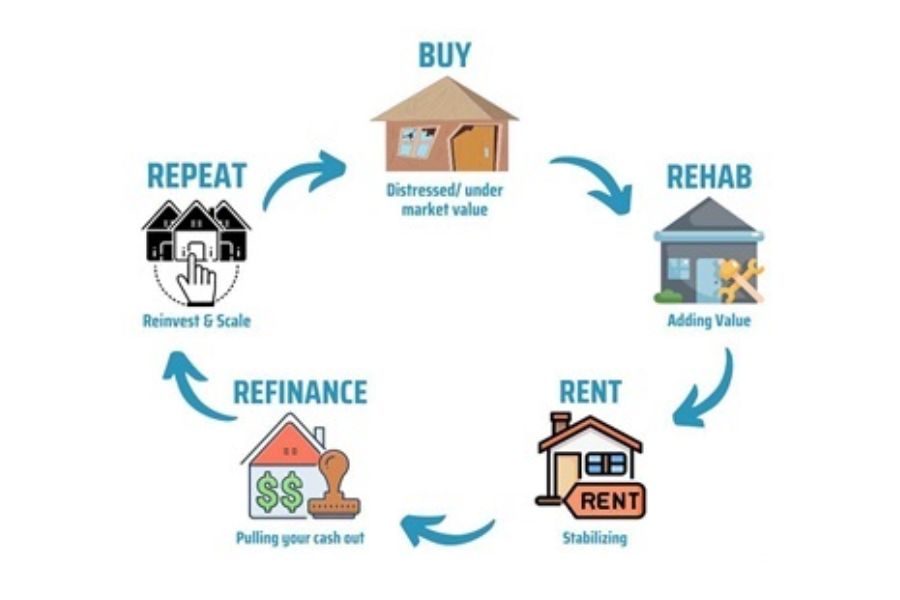
Rent it out next. That monthly cash flow covers your mortgage and expenses.
Refinance after that. Pull your initial investment out with a cash-out refi. Banks usually allow 75-80% of the new value.
Now, repeat. Use your recovered cash to buy the next property.
Why BRRRR Rocks:
- Lower upfront cash needed
- Tap into created equity
- Get passive income
- Grow your portfolio with the same money
How I Applied BRRRR to My First Property
My first BRRRR deal took careful planning. I needed the right property to make it work.
I hunted for distressed listings on the MLS that had been sitting for months. Motivated sellers were open to negotiation.
Cold calling owners worked best for me. Building rapport over the phone beat sending emails or letters.
Here’s how the numbers looked:
- Comps: $200,000
- Max offer: ($200,000 × 70%) – $20,000 reno = $120,000
The rehab took three months. Managing contractors wasn’t always smooth, but paying in stages kept things on track.
I screened tenants with background and credit checks. Rent had to cover all expenses—mortgage, insurance, taxes.
After six months, I refinanced with a DSCR loan. The bank appraised my place at $195,000.
A 75% cash-out refi gave me $146,250. After paying off the $140,000 in costs, I had $6,250 ready for the next deal.
Maximizing Profits With the BRRRR Strategy
BRRRR investors know the buy phase is where you make your money.
What I look for:
- Properties 30% below market
- Strong rental demand neighborhoods
- Cosmetic repairs only (no gut jobs)
- Multi-units for better cash flow
Renovation efficiency matters. Kitchens and bathrooms give the best bang for your buck.
Standardizing renos—same contractors, same materials—cuts costs. Bulk buying helps too.
My favorite profit tips:
- Negotiate material prices by buying in volume
- Build relationships with reliable contractors
- Focus on practical upgrades, not luxury
- Time your refinance when rates are low
Refinancing speed determines how fast you can repeat the process. BRRRR-friendly lenders are gold.
Hard money lenders move quicker than banks. Private lenders can be even more flexible if you have a track record.
Once you hit ten properties, you’ll need commercial loans. Conventional lenders usually cap you at ten.
Each BRRRR deal builds your experience and reputation. That opens doors to bigger and better opportunities.
Creative Financing Tactics for Beginners
If you’re short on cash, creative financing can get you started. I used hard money loans and partnerships to build wealth when I didn’t have much to begin with.
Leveraging Hard Money and Alternative Loans
Hard money lenders care more about the property than your credit. They work fast—sometimes closing in just a week or two.
Why I like them:
- Quick approvals
- Loans based on property value
- Great for flips
- Can borrow more than with banks

They’re pricier than banks, though. Expect 8-15% interest and some upfront points. Most hard money loans last 6-12 months.
Portfolio lenders keep loans in-house and offer more flexibility. They don’t care how many properties you own.
Business credit lines are handy for down payments. You can get $50,000-$250,000 unsecured—no personal assets needed.
Private money lenders are just people with extra cash to invest. They often offer better terms if you build trust.
Using Partnerships to Grow Faster
Partnerships can open doors you can’t afford alone. One partner brings the cash, the other brings the hustle.
Common splits:
- 50/50 if you both contribute equally
- 70/30 if one does most of the work
- 80/20 if one is just funding the deal
Joint ventures work for single deals. Each partner keeps their business separate, which lowers the legal risk.
Who makes a great partner?
- Experienced investors with money
- Business owners looking for passive income
- Family or friends (if you trust them)
- Real estate pros
Always set clear agreements. Spell out who does what, how profits get split, and what happens if someone wants out.
Some deals use seller financing partnerships. The seller acts as the bank, so you skip the usual loan process. Flexible terms can make the deal work for everyone.
Navigating Obstacles and Building Long-Term Success
Every real estate investor hits bumps in the road. The trick is to learn from mistakes, manage your properties well, and set up systems so you can keep growing after those first few deals.
Learning From Failure and Setbacks
Let’s face it—every real estate investor stumbles. Losses and mistakes? They’re practically a rite of passage. The trick is to treat those setbacks as tuition, not a stop sign.

Some of the early mistakes I’ve seen (and made) include:
- Skipping inspections and hoping for the best
- Guessing too low on repair costs—by 20-30% sometimes
- Accepting any tenant out of desperation
- Forgetting to stash enough cash for emergencies
When a deal blows up, savvy investors pause and dig into what went wrong. I jot down the exact mistakes and add them to my ever-growing checklist. It’s humbling, but it works.
I know someone who lost $15,000 on his first place because of hidden foundation problems. Brutal, right? Instead of quitting, he started hiring structural engineers for every inspection. That $15,000 flop ended up saving him from even bigger disasters later.
Record everything—wins, losses, and all the in-betweens. Track which neighborhoods actually deliver. Notice which contractors finish jobs on time. Over time, this info becomes your personal playbook.
Managing Tenants and Property Maintenance
Good tenants? They’re gold. They pay on time and treat your place like it’s their own. Bad tenants… well, they can turn your investment into a nightmare.
Here’s what I always check when screening tenants:
- Credit score above 650
- Income at least 3x the rent
- Zero recent evictions
- Thumbs-up from past landlords
I set up simple systems for maintenance requests. Some apps let tenants snap a photo of the problem and send it straight to me. It’s a lifesaver for deciding what’s urgent and what can wait.
Start building relationships with contractors before you’re desperate. Get three quotes from plumbers, electricians, and handymen. I usually test them with a small job first to see how they do.
Don’t forget to budget for these:
- 5-10% of rent for ongoing maintenance
- 5% for vacancies
- 2-3% for property management if you hire someone
Emergency repairs love to show up at the worst possible times. I keep $2,000-$5,000 per property in a separate account just for maintenance. It beats scrambling for a credit card when the water heater explodes.
Scaling Beyond Your First Properties
Once you’ve got your first rental humming along, the urge to grow gets real. But scaling up takes a different mindset.
Most investors I know pick one strategy and stick with it for a while. Maybe it’s single-family homes in one area. Others dive into small apartment buildings. Don’t try to do it all—master one approach first.

Here are some systems that make growth way easier:
- Use property management software to track money in and out
- Standardize your lease agreements and tenant applications
- Build real relationships with lenders who get your goals
- Work with accountants who know real estate tax hacks
Thinking about growing faster? Try using other people’s money. Team up with family, find private lenders, or join an investment club where everyone pools their cash.
Aim to replace your day job income in 3-5 years. For most people, that means snagging 5-10 rental properties, depending on your salary and each property’s cash flow.
Keep it simple when tracking progress. Check your monthly cash flow every quarter. See how quickly you fill vacancies. Notice which properties seem to eat up all your time and money.
Frequently Asked Questions
Starting with just $50 is totally possible. Fractional real estate investing through platforms like Concreit and Fundrise opens the door for nearly anyone. Creative financing and a little networking can help you build a real portfolio, even if you’re strapped for cash.
What are the initial steps to building a lucrative property portfolio with minimal investment?
Open an account with a low-minimum platform like Concreit—it lets you start with just $1. Fundrise is another option and only asks for $10 to get going.
Focus on fractional real estate platforms to begin with. They let you own slices of different properties without massive down payments.
Make small, regular contributions each month. Even $50 monthly builds momentum faster than you’d think.
Spread your investments across different property types. Diversifying between residential, commercial, and debt deals keeps risk in check.
Can you leverage real estate trading to expand an investment portfolio on a budget?
Platforms like Ark7 let you buy and sell fractional property shares. It’s a way to get liquidity that traditional real estate just can’t offer.
Just remember—there’s usually a minimum holding period. Ark7, for example, makes you wait a year before you can sell.
If you want quicker turnover, check out Groundfloor’s short-term loans. Their hard money loans typically last three to twelve months.
Flipping is easier with debt investments than with equity. Interest-bearing notes give you more predictable exit dates.
What strategies exist for individuals with little capital to invest in the real estate market effectively?
Dollar-cost averaging works wonders. Put in small amounts monthly instead of waiting to save up a big chunk.
Fractional ownership platforms are game-changers. Arrived lets you invest $100 in a single rental property.
Want instant diversification? Try a real estate investment trust (REIT). Most platforms let you get started with very little.
Hard money lending is another way to earn steady returns. On Groundfloor, you can join a loan for as little as $10.
How can one overcome financial constraints to create a successful real estate business?
Co-invest with friends or family to lower your individual cash needed. Investment clubs let you get in on bigger deals for as little as $5,000.
Pooling resources spreads out both the risk and the minimums. It’s a win-win for everyone involved.
Try passive income strategies if you’re not into hands-on management. Fractional ownership means no landlord headaches, but you still get a share of the profits.
Start small and build your confidence. Those first wins, even if they’re tiny, make it easier to take on bigger deals down the road.
What role does networking play in scaling a real estate empire from the ground up?
Investment communities are gold mines for vetted deals and real-world advice. Members share tips on the best platforms and sponsors.
Networking uncovers deals you’d never find alone. Club memberships can unlock exclusive investment options.
Seasoned investors love to share what works (and what doesn’t). Their experience helps you dodge rookie mistakes.
Real estate groups make co-investing simple. Members pool their cash and go after bigger opportunities together.
Are there creative financing options for aspiring real estate investors with limited funds?
Let’s be real—jumping into real estate feels impossible if you don’t have piles of cash. But you’ve got options, and some of them are surprisingly accessible.
Fractional Investing: No Big Loans Needed
I love that fractional investing skips the whole mortgage circus. You just pick a platform, and they take care of buying, managing, and financing the property. It’s hands-off, and honestly, it feels a bit like cheating the old system.
Flexible Payment Plans
Some platforms get that not everyone can drop a lump sum. They let you break your investment into smaller chunks over a few months. That makes things way less intimidating and way more doable.
Automatic Reinvestment
If you’re like me and want your money to work overtime, look for platforms that offer automatic reinvestment. Fundrise, for example, lets you roll your dividends right back in, so your returns can start snowballing—even if you’re not adding new cash.
Debt Investments Without the Headaches
Not interested in owning property? Debt investments might be your thing. Hard money lending platforms like Groundfloor let you fund real estate loans and collect fixed returns. You skip the landlord drama and still get a slice of the action.Creative financing isn’t just for the pros. With these options, even beginners can start building wealth in real estate—without emptying their bank accounts.
