

You ever fill up your car and think, “Where does all that spare change even go?” I used to let those coins pile up in my cup holder—until I realized they could actually help build my wealth. That spare change from gas station runs? It could be working for you instead of getting lost in the couch.
Micro-investing apps can round up your gas purchases and invest the extra cents into diversified portfolios. I’ve watched friends build thousands of dollars over a few years, just from their spare change. It’s basically a piggy bank that grows your money instead of letting it sit around.

Here’s the cool part: you probably won’t even notice the money’s gone. If you buy $47.23 worth of gas, the app rounds it up to $48.00 and invests that 77 cents. Do this with all your purchases, and suddenly you’re investing $50 to $100 every month—without changing your spending habits.
Key Takeaways
- Micro-investing apps scoop up your spare change from purchases and invest it into retirement portfolios.
- You can build real savings over time without noticing those small amounts leaving your account.
- This works best when you combine it with traditional retirement planning and keep an eye on app fees.
How Gas Money Becomes Your Micro-Investing Powerhouse
I love that my daily gas purchases now double as investment contributions. Micro-investing apps link to my accounts and turn routine spending into long-term wealth building.
Turning Everyday Purchases Into Investments
It honestly feels pretty good to know my gas station runs are helping my future. Every time I fill up, the app grabs those extra cents and puts them to work for me.
The process is automatic. I spend $47.23 on gas, the app rounds it up, and $0.77 lands in my investment account.
This strategy works with everything I buy—coffee, groceries, parking meters, you name it. Those small amounts add up surprisingly fast.
A few micro-investing apps I’ve tried or seen people use:
- Acorns
- Stash
- Qapital
- Digit
The magic is in the automation. I don’t have to think about investing; it just happens. My gas money quietly becomes my retirement foundation, and I barely notice.
The Round-Ups Feature Explained
Round-ups make gas money investing possible. The app watches my transactions and figures out the difference between what I spent and the next dollar.

Let me show you how my recent gas purchases turned into investments:
| Purchase Amount | Rounded To | Investment |
|---|---|---|
| $42.67 | $43.00 | $0.33 |
| $38.14 | $39.00 | $0.86 |
| $51.92 | $52.00 | $0.08 |
The app collects these little bits through the week. When they hit a minimum (usually $5), it invests the money automatically.
I can tweak my round-ups settings, too. Some apps let you double or triple the spare change for faster investing. If my gas costs $45.30, I could invest $1.40 instead of $0.70.
The money goes into diversified ETFs or fractional shares. My gas money ends up owning pieces of hundreds of companies, so I’m not putting all my eggs in one basket.
Linking Credit, Debit, and Checking Accounts
Setting up account connections is quick and unlocks automatic investing. I link my debit card, credit card, and checking account to catch all my spending.
My debit card is the simplest for round-ups. When I buy gas, the app sees it right away and calculates the spare change. The money comes straight out of my checking account.
If I use my credit card, the app tracks those purchases and pulls the round-up from my checking account separately.
I always look for these security features:
- Bank-level encryption
- Read-only access (so apps can’t move my main funds)
- FDIC insurance
- Two-factor authentication
I keep my main checking account linked as the funding source. That way, round-ups come from cash, not credit. The apps usually withdraw the total once or twice a week.
Most platforms connect with thousands of banks and credit unions. I’ve never had trouble linking my local credit union or any big bank.
Unveiling Micro-Investing Apps and Platforms
A handful of apps turn your daily spending into investments by rounding up each transaction. Acorns leads with automated round-ups, while Stash and Robinhood offer different ways to build wealth at your own pace.
Acorns: Automated Investing With Each Fill-Up
Acorns makes it easy to invest your gas money. Fill up for $47.30, and the app rounds up to $48.00, investing the 70 cents for you.
It links to your debit or credit cards and handles the investing automatically. After you set it up, you can just forget about it.
Acorns has three plans:
| Plan | Monthly Fee | Features |
|---|---|---|
| Personal | $3 | Investment account + IRA |
| Personal Plus | $5 | Checking account included |
| Premium | $9 | Custodial accounts for kids |
Acorns builds diversified portfolios out of low-cost ETFs. The app picks from five options, depending on your risk level.
You can also add recurring investments to boost your account faster.
The Acorns Earn feature pays you when you shop with partner brands. You might get 25 cents invested for every food delivery.
Comparing Stash, Robinhood, and Other Apps
Stash charges $3 to $9 a month but gives you more control. You can pick from over 3,000 stocks and ETFs.
They include a bank account with no overdraft fees, and you can even invest in crypto like bitcoin and ethereum.
Robinhood goes in another direction. It’s all about commission-free trading and zero monthly fees. But it doesn’t have the automatic round-up feature, so you’ll need to be more hands-on.
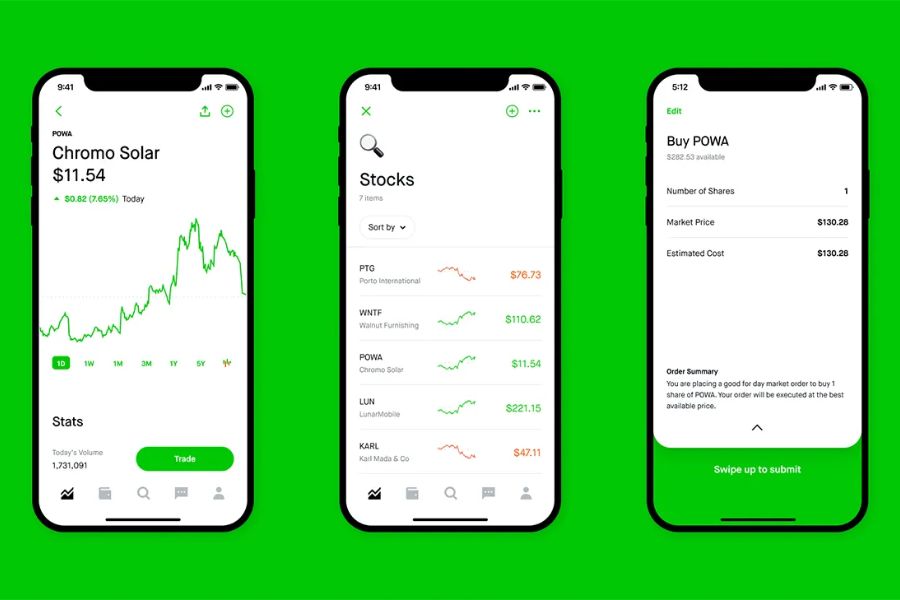
SoFi Active Invest skips management and monthly fees. You just pay the ETF expense ratios.
Public offers free investing with a social vibe. You can peek at other people’s portfolios and join investment chats.
When it comes to fees:
- Monthly fees can eat into small balances.
- Commission-free apps suit active traders.
- Round-up features are perfect for passive investors.
Automated Investing for Effortless Growth
Automated investing takes away the daily decisions that trip people up. I set my preferences once, and the app handles the rest.
Most micro-investing apps use robo-advisors to manage portfolios. These robots rebalance and reinvest dividends for you.
What I love about automation:
- Round-up investing: Spare change from every purchase
- Recurring deposits: Weekly or monthly transfers
- Portfolio rebalancing: Keeps your risk in check
- Dividend reinvestment: Grows your money faster
Consistency is everything. Small, regular investments can grow into something big over time, thanks to compound interest.
Management fees vary a lot. For small accounts, monthly fees can sting more than percentage-based ones.
I’d start with apps that automate everything. As you learn and your balance grows, you can always switch to more advanced platforms.
Building Your Retirement Portfolio With Spare Change
Micro-investing turns your daily spending into retirement wealth. Automated round-ups drop your spare change into diversified investment portfolios. ETFs usually form the backbone, giving you exposure to hundreds of stocks and bonds for minimal fees.
How Investments Are Allocated and Diversified
When I invest my spare change, the money splits across different asset types to spread out risk. Most apps use a mix of stocks, bonds, and sometimes real estate.
A typical moderate-risk mix:
- 60% stocks (U.S. and international)
- 35% bonds (government and corporate)
- 5% real estate or commodities
The split depends on your age and risk tolerance. Younger investors (like me) can handle more stocks since there’s time to recover from market dips.
Diversification happens automatically across thousands of companies. Instead of betting on one stock, my spare change covers whole market segments.
This helps protect me if a single company tanks. If one stock drops, the rest of my portfolio could keep steady or even grow.
Role of ETFs and Exchange-Traded Funds
ETFs let me own tiny pieces of giant investment funds. Each ETF holds hundreds or thousands of stocks and bonds.
Some ETFs I see a lot in micro-investing:
- VTI – Total Stock Market Index
- VXUS – International Stock Index
- BND – Total Bond Market Index
- VNQ – Real Estate Investment Trust Index
These exchange-traded funds usually charge less than 0.2% per year. That means I keep more of my returns.
ETFs trade during the day like stocks. This gives apps the flexibility to buy shares whenever my spare change adds up.
Selecting the Right Investment Portfolio
I pick my portfolio based on age, risk tolerance, and how long I have until retirement. Most apps offer ready-made portfolios, from conservative to aggressive.
Conservative portfolios are better if I’m close to retirement:
- 30% stocks, 70% bonds
- Lower growth, more stability
Aggressive portfolios fit younger investors:
- 90% stocks, 10% bonds
- Higher growth, more ups and downs
Target-date funds are another option. They automatically get more conservative as I approach retirement.
Starting early and staying consistent really matters. Even $1 a day in spare change can grow to $30,000+ in 30 years, thanks to compound growth.
Integrating Micro-Investing Into Your Retirement Plan
In my experience, micro-investing works best as a sidekick to your main retirement plan. Spare change can boost your IRA, add to your 401(k), or just build wealth slowly and steadily in the background.
Using Micro-Investing for IRAs and 401(k)s
I always tell folks to start with their IRA. Micro-investing platforms make it super easy to set up automatic transfers, and many let you invest spare change right into an IRA.
- Contribute pre-tax dollars up to $6,500 a year ($7,500 if you’re over 50)
- Micro-investments grow tax-deferred
- Great for gas money round-ups and small weekly transfers
Roth IRAs:
- Use after-tax dollars for tax-free growth
- Withdraw contributions whenever you want, penalty-free
- Awesome for younger investors just getting started
401(k)s are a little trickier since most employers don’t support micro-investing apps yet. I suggest using micro-investing to build an emergency fund first. Once you hit $1,000, move it to your 401(k) in one go.
Some newer 401(k) providers are adding round-up features. It’s worth asking HR if yours does.
Supplementing Traditional Retirement Accounts
I see micro-investing as the perfect backup singer to your main retirement accounts. It fills in the gaps that regular saving can miss.
Monthly Contribution Comparison:
| Method | Average Monthly Amount | Annual Total |
|---|---|---|
| Gas roundups | $15-25 | $180-300 |
| Coffee purchases | $20-35 | $240-420 |
| Weekly transfers | $20-40 | $240-480 |
These small amounts add up, and you barely feel it. Micro-investing grabs money I’d probably waste anyway.
Consistency is the secret sauce. Set up automatic round-ups on gas, groceries, and coffee. This creates a “stealth savings” system that works quietly in the background.
Don’t count on micro-investing alone for retirement, though. Use it to bump up your total savings rate by a couple percent each year. That extra cash can make a real difference over the long haul.
Long-Term Impact on Your Financial Future
I’ve done the math on micro-investing and how it can change your retirement game. Tossing just $25 a month from gas roundups into investments can make a surprising difference down the road.
20-Year Growth Projection (7% annual return):
- Monthly micro-investment: $25
- Total contributions: $6,000
- Final value: $12,300
30-Year Growth Projection:
- Monthly micro-investment: $25
- Total contributions: $9,000
- Final value: $25,100
These numbers use average stock market returns. Compound interest quietly does the heavy lifting for you.
I’ve noticed micro-investing nudges me toward better money habits. Once I started investing spare change, I paid more attention to my spending.
That awareness made bigger contributions to my main retirement accounts feel easier. Funny how small changes add up.
Depending on the accounts you pick, you might score some tax perks. IRA contributions can lower your current tax bill, while Roth accounts offer tax-free retirement income.
Honestly, starting small but sticking with it? That’s the real secret. Your future self will thank you for turning gas money into long-term wealth.
Maximizing Benefits and Minimizing Costs
Every penny you save on fees is another penny working for your retirement. I love setting up recurring investments and exploring custodial accounts to turn gas savings into something much bigger.
Understanding and Managing Fees
I’ve learned the hard way—management fees can eat into your retirement stash faster than you’d expect. Most micro-investing apps charge somewhere between 0.25% and 1% each year.
If you invest $100 monthly from gas savings, a 0.5% fee only costs $6 in the beginning. But over 30 years? Those fees snowball into thousands lost.
I always compare fee structures before picking a platform:
- Fidelity: $0 account fees, $0 stock trades
- Schwab: $0 account fees, $0.03 per share for penny stocks
- Vanguard: 0.04% to 0.20% expense ratios on index funds
Some apps tack on transaction fees. Investing $25 a week with a $1 fee? That’s 4% gone instantly—not worth it.
I suggest going with platforms that use percentage-based fees instead of flat ones. That way, your costs stay in line with your investment.
Boosting Returns With Recurring Investments
Recurring investments turn gas savings into a real wealth engine. I set up automatic transfers each week, usually when I would’ve filled up my tank.
Dollar-cost averaging fits perfectly with this strategy. I invest the same amount on a schedule, no matter what the market’s doing.
If prices dip, I end up buying more shares. If they rise, I buy fewer. No stress about timing the market.

Here’s what my weekly investment routine looks like:
- Monday: $25 from skipping coffee runs
- Wednesday: $30 saved by walking instead of driving
- Friday: $40 from meal planning instead of takeout
That adds up to $95 a week, or $4,940 a year. At 7% annual returns, this could become $491,403 in 25 years.
Automatic investing keeps me from second-guessing myself. The money moves before I even think about spending it elsewhere.
Opening Custodial Accounts for Family
Custodial accounts let me invest gas savings for my kids’ futures. I control the account until they hit 18 or 21, but the money belongs to them.
I opened custodial accounts through my regular brokerage. The fees stay low, but the tax rules change a bit.
The first $1,150 of gains is tax-free. The next $1,150 gets taxed at my kid’s rate, usually just 10%.
I put $50 a month per child into these accounts from transportation savings. Teaching kids about investing early gives them skills they’ll use for life.
When they reach the age of majority, the account transfers over automatically. It’s a great head start for college or retirement.
I stick with broad market index funds in these accounts. Simple and low-cost—just the way I like it for long-term growth.
Frequently Asked Questions
People ask all the time about green investment options and building retirement wealth with small amounts. Here are some answers to the most common questions, from fossil fuel-free funds to ESG picks at major brokers.
What are the top fossil fuel-free funds to consider for eco-friendly investment?
I’d start with the Vanguard ESG U.S. Stock ETF (ESGV). It covers the whole market and skips fossil fuels.
The iShares MSCI ACWI Low Carbon Target ETF (CRBN) gives you global exposure while keeping carbon emissions in check. It holds over 1,600 companies worldwide.
For bonds, I like the Vanguard ESG U.S. Corporate Bond ETF (VCEB). It avoids fossil fuel and tobacco companies.
If you’re after growth, the Nuveen ESG Large-Cap Growth ETF (NULG) focuses on companies with strong environmental records. It’s done well over the last five years.
How can I identify the best-performing green mutual funds for long-term growth?
I watch three things when picking green funds. First, the expense ratio—try to keep it under 0.75%.
Second, check the 10-year return if the fund’s been around that long. The best green funds often match or beat the S&P 500.
Third, read the holdings list. Make sure the companies actually line up with your values.
Morningstar ratings help me compare funds, too. I usually stick with 4 or 5-star picks for steady performance.
What role do weapon-free funds play in socially responsible investing?
Weapon-free funds skip companies making military weapons or selling firearms. If you want to avoid supporting the weapons industry, these funds make it easy.
Most weapon-free funds also avoid tobacco, gambling, and fossil fuels. There’s a lot of overlap with other ESG approaches.
The Vanguard ESG funds automatically leave out big weapon makers. That makes them an easy choice for anyone going weapon-free.
Some funds focus only on weapons, while others cast a wider net with social and environmental screens.
How can Vanguard’s fossil fuel-free offerings enhance my retirement portfolio?
Vanguard’s ESG funds charge super low fees compared to other green options. The ESGV fund costs just 0.12% a year.
You get broad diversification—thousands of companies in tech, healthcare, and consumer goods, all without oil stocks.
I can pick up Vanguard ESG funds through most 401k plans and IRAs. That makes them simple to add to retirement accounts.
Performance-wise, Vanguard’s ESG funds have kept up with regular index funds lately. You don’t have to give up returns to invest with your values.
What are the key features of Fidelity’s ESG funds that could benefit my financial future?
Fidelity offers ESG versions of their top funds. The Fidelity U.S. Sustainability Index Fund (FITLX) follows their total market strategy.
No minimum investment means you can start with any amount, even through micro-investing apps.
Fidelity’s ESG research team screens companies for environmental and social issues. They update holdings regularly to keep things fresh.
Expense ratios on Fidelity ESG funds run from 0.11% to 0.51%. Lower costs mean more of your money gets to grow.
Can micro-investing in green funds significantly impact my retirement savings?
Honestly, it’s wild how small amounts can snowball over time. Compound interest works its magic, and suddenly that $25 a month in green funds? It could turn into $65,000 after 30 years. Pretty cool, right?
I’ve noticed a bunch of micro-investing apps now throw in ESG fund options. For example, Acorns lets me round up my morning coffee purchase and drop the spare change straight into sustainable investments. Feels good, honestly.
If you ask me, the real trick is just starting early—and not giving up when it feels pointless. Even tossing in just a dollar a day into green funds stacks up. It doesn’t look like much at first, but give it a decade or two and you’ll be surprised.
Here’s something I wish more people knew: green funds can actually keep up with regular funds over the long haul. So, you don’t have to pick between solid returns and your values. Why not aim for both?
