

Last year, I watched my vacation fund grow from spare change to $8,000. I didn’t get a raise or hit the jackpot. Instead, I started using a simple rounding up trick that turned everyday purchases into my ticket to Europe.
Honestly, rounding up every purchase to the nearest dollar and stashing the difference made saving feel painless. Most folks can save $2-5 a day this way—no big sacrifices required.

This method works because those tiny amounts don’t sting. But wow, do they pile up when you stick with it.
Every coffee, gas stop, or quick grocery run can chip in for your next adventure. I know people who’ve saved $1,500 to $3,000 in a year just by letting their apps do the work.
Key Takeaways
- Rounding up your spending can quietly build $1,500-$3,000 a year for travel—without wrecking your budget.
- Parking those savings in a high-yield account boosts your fund and keeps it handy for trip planning.
- Automating the process means you save without thinking about it, making your financial goals way more achievable.
The Power of Rounding Up Purchases
Rounding up turns spare change into real money by moving the difference between what you spend and the next dollar into savings. It feels almost too easy, but that’s what makes it stick.
Point-of-sale fundraising programs use the same idea. Small amounts, collected often, can do some heavy lifting.
How Round-Up Savings Work
Round-up programs round each purchase to the next dollar and shift the extra into your savings. Buy a coffee for $4.30? You save 70 cents, just like that.
Banks like Chase now include automatic round-ups in their savings features. Capital One and Discover also let you round up through their apps.
When you swipe your debit card, the app does the math and moves the change—usually within a day.
Some apps let you round up to the nearest $5 if you want to supercharge your savings. Just watch your budget if you go that route.
Most people see $30 to $100 a month from round-ups alone. Shop more? You’ll save more. The trick is to keep it consistent.
Psychological Benefits of Rounding Up
Rounding up works because you barely notice the money leaving. It’s almost invisible.
You keep your usual spending habits, but your savings grow in the background. No sacrifices, just progress.
Momentum is huge here. Seeing those little deposits add up makes you want to save even more.

Automation means you don’t have to decide how much to save every day. The system just takes care of it.
It helps to watch your balance grow. Most apps show your round-up total front and center, which definitely keeps the motivation alive.
Point-of-Sale Fundraising Success Stories
Retailers use round-up tech for charity, too. When you round up at checkout, that spare change goes to a good cause.
Participation rates are sky-high. About 70% of shoppers say yes to round-up donations, probably because it feels so manageable.
Professor Katie Kelting from St. Louis University found that asking for spare change beats asking for bigger donations—people just say yes more often.
Companies like RoundUp let you link your Visa or Mastercard so you’re always donating a little with each purchase.
It’s wild how quickly it adds up. Even 25-75 cents per transaction, multiplied by thousands of shoppers, brings in real money for nonprofits.
Building a Vacation Fund with Everyday Transactions
Apps that round up your purchases make saving almost effortless. They grab spare change from daily spending and stash it in a dedicated account.
If you set up a good tracking system and choose the right savings account, your vacation fund grows faster—and you can actually see your progress.
Tracking Your Progress Automatically
Round-up apps show you in real time how much you’re saving with each swipe. Most send notifications after every purchase, so you can watch your fund grow.
Qapital and Acorns have dashboards that break down your savings by day, week, or month. Sometimes it’s just 25 cents from a coffee or 75 cents from a bus ride, but it adds up.
These apps estimate how much you’ll save in a year based on your habits. Most people rack up $30 to $50 a month, or $360 to $600 a year, without thinking about it.
You can set specific vacation goals, and the app will show a progress bar and even predict when you’ll hit your target.
Automatic categorization shows which purchases bring in the most spare change. For me, it’s always gas stations and grocery stores.
Choosing the Right Account for Your Savings
High-yield savings accounts help your vacation fund grow faster by paying more interest than regular ones. Some offer rates 10 to 20 times higher than old-school banks.
Apps like Chime have built-in savings accounts with solid rates. Your spare change moves over automatically, no extra effort required.
A dedicated vacation fund beats a general savings account because it keeps your travel money safe from everyday spending.
FDIC-insured accounts protect your money up to $250,000. Chime and most banks offer this, but investment apps like Acorns come with some market risk.
Watch out for account fees. Some high-yield accounts want a minimum balance or charge monthly fees, which can eat into your savings.
Integrating Round-Up Tools with Budgeting
Round-up apps work best when you connect them to your main checking account and cards. Bank of America’s Keep the Change rounds up debit purchases and shifts the change to savings.
Linking multiple cards means more chances to save. Groceries, gas, online shopping, subscriptions—they all count.
You can schedule automatic transfers on top of your round-ups. Qapital lets you set weekly or monthly deposits to keep your fund growing.
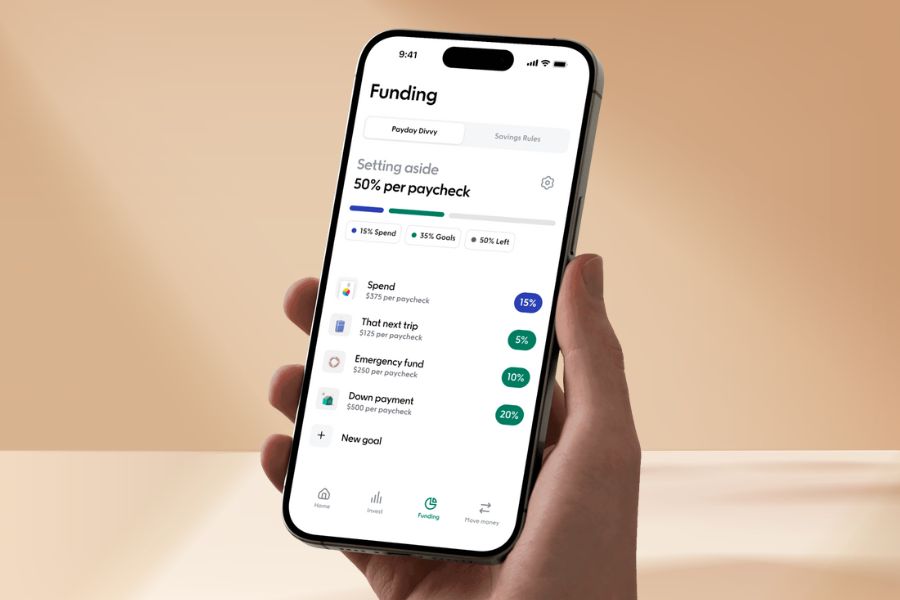
Spending analysis features help you spot where you could save even more. If you aim to spend $15 at coffee shops but actually spend $20, the app can save the $5 difference.
Goal-based budgeting lets you set aside a chunk of your income for travel. Combine round-ups with traditional budgeting for even faster results.
Maximizing Growth: Where to Store Your Saved Change
Once you’re collecting spare change with round-up apps, where you put that money really matters. High-yield savings accounts usually pay way more than regular ones. Certificates of deposit can work, too, if you don’t need the cash right away.
Traditional vs. High-Yield Savings Accounts
Big banks often pay almost nothing in interest—sometimes just 0.01% APY. That’s 10 cents a year on $1,000. Oof.
High-yield savings accounts are a different story. Online banks and credit unions often pay 4% to 5% APY. That’s $40 to $50 a year on the same $1,000.
Look for accounts with no monthly fees. Chime pays 1.00% APY on its savings, but you can connect to outside accounts for even better rates.
Quick comparison:
- Traditional: 0.01% – 0.10% APY
- High-yield: 4.00% – 5.00% APY
- Online banks usually win on rates
- Credit unions can be great if you qualify
Certificates of Deposit and Short-Term Investments
Certificates of deposit (CDs) pay higher rates, but you have to leave your money alone for a set time.
CD basics:
- Terms: 3 months to 5 years
- Longer terms = higher rates
- Early withdrawal = penalty
- Current rates: often 4.5%+ APY
If you know your vacation date, a short-term CD can boost your savings. A 12-month CD might pay 4.8% APY, compared to 4.2% in a savings account.
Some round-up apps let you invest your change. Worthy Bonds pays 5.65% APY through small business loans. Acorns invests in a portfolio for you.
Things to keep in mind:
- Investments can earn more
- But there’s market risk
- Not guaranteed like CDs
- Better for long-term plans
Ensuring FDIC Protection
FDIC insurance covers up to $250,000 per account at member banks. Most round-up apps and banks have this protection.
FDIC covers:
- Savings and checking accounts
- CDs
- Money market accounts
Apps like Chime and Acorns partner with FDIC-insured banks. Double-check your app for coverage before opening an account.
Non-FDIC accounts carry risk. Worthy Bonds and some investment apps don’t have federal insurance. These might pay more but come with more risk.
Always check the bank’s website or the FDIC database for coverage. Look for clear info about deposit insurance in the account details.
Budgeting and Financial Planning for Travel Goals
Turning a dream trip into reality takes a smart plan. I focus on setting clear cost targets, building a dedicated fund, and balancing travel with my other money goals.
Setting a Clear Vacation Budget
Start with a destination and travel dates. It’s wild how much prices can change depending on where and when you go.
I list all my expenses in two buckets:
- Fixed: flights, hotels, rental cars, insurance
- Variable: meals, tours, shopping, tips, local transport

Travel sites help me get real prices for flights and hotels. I always add 15-20% for surprises.
I break down daily spending by category: maybe $60 for food, $40 for activities, $20 for extras.
Sample 7-Day Trip Budget:
| Category | Amount |
|---|---|
| Flights | $800 |
| Hotel | $1,200 |
| Meals | $420 |
| Activities | $280 |
| Miscellaneous | $140 |
| Buffer (15%) | $426 |
| Total | $3,266 |
Creating a Sinking Fund Strategy
A sinking fund is just a savings account for one goal. I open a high-yield account just for travel.
Divide your trip cost by the months until you leave. For a $3,000 trip in 12 months, that’s $250 a month.
Set up automatic transfers right after payday. You won’t even miss the money.
Name your account something fun, like “Italy 2026 Trip.” It keeps you motivated and stops you from dipping into it for other stuff.
Track your progress every week or month. I love seeing my fund inch closer to my goal.
Aligning Travel with Other Financial Priorities
I always put essentials first: rent, utilities, groceries, and minimum debt payments.
Next, I make sure to build a $1,000 emergency fund before saving for travel. You never know when life will throw you a curveball.
Split your extra money between goals. Maybe 60% for travel, 25% for debt, 15% for other savings.
Sometimes, I wait until I’ve paid off a big debt before booking a trip. It just feels better.
Treat your travel fund like a bill—pay yourself first every month. That way, your vacation dreams don’t get lost in the shuffle.
Advanced Tips: Turning Spare Change into Bigger Financial Wins
You can really level up by mixing round-up savings with other strategies and low-risk investments. The trick is finding a balance between growing your vacation fund and keeping it safe.
Combining Round-Ups with Other Saving Methods
Let’s be honest—round-up apps shine brightest when you pair them with other automatic saving tricks. I’ve seen plenty of savvy savers juggle a few apps at once, and wow, those spare change collections really add up fast.
Here are some favorite combo moves:
- Use a round-up app and set up weekly automatic transfers (yes, both!)
- Pair round-up savings with cashback credit cards for a double dip
- Toss tax refunds and bonuses right into your round-up account
- Create separate round-ups for different spending categories—think travel, gifts, or even coffee
Some folks connect round-up apps to both checking and credit card accounts. That move basically doubles your chances to save since every swipe gets rounded up.
I’ve tried adding a weekly transfer too. Even $10 per week means $520 extra saved in a year—surprisingly painless.
Bank of America’s Keep the Change program lets you round up debit card purchases automatically. If you combine that with apps like Qapital or Acorns, you’re building multiple savings streams from the same spending habits. Not bad, right?
Exploring Low-Risk Investment Options
Once you’ve got a pile of spare change, why not let it work for you? I started moving my round-up stash from plain savings into low-risk investments, and the growth surprised me.
Treasury bonds feel super safe—government-backed, short-term, and currently offering about 4-5% returns. They mature in 3-12 months, so you’re not locking up your money forever.

Certificates of deposit (CDs) lock in your rate for a set time. A 12-month CD at 4-5% means guaranteed returns, no drama.
Low-risk mutual funds and ETFs offer diversification with less volatility. I prefer bond funds or conservative balanced funds because they don’t swing wildly like stocks.
Apps like Acorns invest your round-up money automatically into diversified portfolios. If you’re nervous about risk, their conservative settings focus on bonds for steady growth.
Money market accounts give you higher interest than regular savings, plus easy access. Many banks offer 3-4% annually, and I love that flexibility.
Balancing Safety and Growth for Short-Term Goals
Vacation funds need a careful mix of growth and safety. I always ask myself: when will I need this money?
If your goal is under 12 months away, stick with high-yield savings or money market accounts. They’re safe, and you’ll get 3-4% returns without risking your vacation.
For goals 1-2 years out, conservative portfolios work well. Try a 70% bond and 30% stock mix for some growth without big downside.
Nobody wants to lose vacation money right before a trip. High-risk investments? Not worth it for short-term goals.
Compound interest works best with time. Even earning 4% instead of 0.5% on round-ups can add hundreds to your fund.
Most round-up apps let you pick your risk level. Conservative options focus on bonds, while moderate ones add some stocks for extra growth.
I always keep 2-3 months of round-up savings in a regular account. That way, if plans change, I can access the cash fast.
Expanding the Impact: From Vacation Funds to Financial Wellness
Round-up savings aren’t just for vacations. This habit builds momentum for everything—emergency funds, retirement, and long-term wealth.
Building Emergency and Sinking Funds
Emergency funds are lifesavers for surprise expenses like car repairs or medical bills. Round-up apps make building these funds almost effortless.
Experts suggest saving three to six months of expenses. If you spend $40 a day, you’ll generate about $15 in round-ups monthly. Over two years, that’s a $360 cushion—without even thinking about it.
Sinking funds are for planned expenses. I use them for things like:
- Car maintenance
- Home projects
- Holiday gifts
- Annual insurance
Many apps let you set separate goals. It’s so much easier to organize money for specific needs and maintain the saving habit.
Consistency is the secret weapon. I used to forget manual transfers all the time. Now, round-up programs just hum along in the background.
Supporting Long-Term Financial Independence
Round-up investing isn’t just a cute trick—it’s a real boost toward retirement or big financial goals. Apps like Acorns invest your change in diversified portfolios.
Dollar-cost averaging happens automatically with round-ups. Spreading out purchases over time usually beats trying to time the market.
If you start young, compound growth is your friend. A 25-year-old who invests $20 a month in round-ups could end up with over $65,000 by retirement, assuming 7% returns. Wild, right?
Some platforms link round-ups directly to retirement accounts. That way, you get the tax perks of IRAs or 401(k)s without extra hassle.
Parents can even send round-ups to 529 plans for college savings. Those accounts grow tax-free if used for education.
The best part? Automation removes the mental block. You don’t need a big lump sum to start investing—just spare change.
Transitioning Round-Up Habits to Broader Wealth Building
Once you see your round-up savings grow, it’s hard not to get hooked. That confidence often leads to bigger financial moves.
Personal finance apps help you spot spending patterns through your round-up activity. This insight can spark smarter debt reduction or better cash flow management.

Many people start with round-ups and then add automatic transfers—maybe $50 a month—once they see results.
Round-up success builds healthy habits:
- Regularly checking accounts
- Setting goals and tracking progress
- Automating savings
- Getting comfortable with investing
I’ve noticed the psychological shift is just as important as the money. Saving consistently feels empowering.
Some users channel round-ups toward debt payments instead. That extra push can speed up credit card or student loan payoff.
When you build a foundation with round-ups, bigger goals—like buying a house or retiring early—start to feel possible. Small, steady actions really do add up.
Frequently Asked Questions
Round-up apps turn spare change into serious vacation savings. I’ve seen people build $8,000 funds just by sticking with micro-investments and smart strategies. Funding your dream trip doesn’t have to wreck your budget.
What are the top round-up savings apps to help fund your next vacation?
Acorns is the big name here, with automatic investing that grows your vacation fund over time. It rounds up purchases and invests the difference in diversified portfolios.
Qapital offers flexible round-up options and goal-setting tools made for travel savings. You can tweak rounding amounts and set up bonus triggers.
Digit analyzes your spending and saves small amounts automatically. Its predictive tech makes sure you don’t overdraft or miss bills.
Chime’s automatic savings rounds up debit card purchases and transfers the difference to a high-yield account. It’s simple and keeps your vacation money accessible while earning interest.
Can you really fund a vacation by rounding up your purchases using apps?
Absolutely. If you make 100 purchases a month, you could save $50-75 just from round-ups.
If you spend about $3,000 monthly on cards, you might rack up $1,800-2,700 per year through round-ups. Add multipliers or bonus savings, and those numbers climb even higher.
Plenty of real users have built $2,000-5,000 vacation funds in 12-18 months using round-up apps alone. The trick is to keep spending patterns steady and avoid dipping into your savings.
How does Capital One’s round-up feature contribute to vacation savings?
Capital One’s round-up program transfers spare change from purchases into designated savings accounts automatically. Their 360 Performance Savings account also pays competitive interest.
You can set up transfers that round purchases to the nearest $1, $5, or $10. That flexibility lets you ramp up savings if you’re feeling ambitious.
The app tracks your progress visually, which is oddly motivating. Plus, you get FDIC insurance and don’t need a separate app.
Are there free round-up apps that assist with saving for travel goals?
Yes! Several big banks offer free round-up features as part of their standard accounts. Bank of America’s Keep the Change rounds up purchases and drops the difference into your savings—no extra cost.
Ally Bank has free automatic savings tools that round up purchases and move money into high-yield accounts. You can set vacation goals and see your progress.
Lots of credit unions do this through their mobile apps, often with better service and security than some standalone apps.
Chime’s savings feature is free for account holders. Every purchase gets rounded up, and your spare change goes straight into a separate savings account earning interest.
What strategies work best for saving up $8,000 in five months for a vacation?
Let’s be real—saving $8,000 in five months means stashing away $1,600 a month. That’s a big lift, so you’ll need a mix of round-up apps, automatic transfers, and cutting back on spending.
Round-ups alone might net you $50-100 monthly, so you’ll have to supplement with other methods. The winning formula? Set up $1,400 in automatic transfers each month, then let round-ups cover the last $200.
Bonus features like 2x or 3x multipliers can help. Toss in extra cash from cashback programs or tax refunds to speed things up.
It’s intense, but with the right combo, you can pull it off.
How can Qapital’s round-up feature boost your vacation fund effectively?
Let’s talk about Qapital’s round-up system—it’s surprisingly flexible. You can pick from three different ways to round up: go to the nearest dollar, multiply your round-ups anywhere from 2x to 10x, or set the “Guilty Pleasure” rule for those little splurges.
I love that you can set up a dedicated vacation fund with a clear target and deadline. Watching the progress bar inch closer to your $8,000 dream trip? That’s real motivation.
Most folks using Qapital’s “Spare Change” feature end up with an extra $30-60 a month, just by letting spare change do its thing. If you crank up the multiplier, you could double or even triple those contributions.
Here’s where it gets really interesting—Qapital lets you automatically invest your vacation savings. So, while your round-ups build up, your money’s also working in the market.
This combo of steady saving and investing could get you to that $8,000 vacation fund faster than you’d expect. Isn’t it wild how small habits can add up to big adventures?
