

You don’t need a huge paycheck or a winning lottery ticket to build real wealth. If you invest just $25 per week and stick with it, you can realistically reach $1 million by age 65. The secret is compound growth—your money earns returns, and those returns earn even more over time. I’ve run the numbers, and small, consistent contributions really can turn into life-changing amounts. By starting now, you give your investments decades to grow. Time becomes your most valuable asset. The earlier you begin, the less you need to put in each week to hit the same goal. This isn’t about risky bets or complicated strategies. Simple, steady investing habits in the right type of account let compounding do the heavy lifting. Once you see the breakdown, you’ll see exactly how $25 a week can set you up for financial freedom.

Key Takeaways
- Small, consistent investments can grow into significant wealth
- Time and compounding are the biggest factors in long-term growth
- Choosing the right investment account can accelerate results
The Power of Compounding: How $25 Grows Over Time
I’ve seen firsthand how small, steady savings can snowball over decades. Letting your money earn returns on both your original deposits and the interest they’ve already earned is the key. Even modest contributions can build wealth if you stay consistent and give compounding enough time.
Understanding Compound Interest
Compound interest means you earn interest on your initial savings and on the interest those savings have already earned. This “interest on interest” effect makes your balance grow much faster than with simple interest.
Here’s the basic formula:
Future Value = P × (1 + r/n)^(n × t)
Where:
- P = principal (starting amount)
- r = annual interest rate
- n = compounding periods per year
- t = number of years
When you invest regularly, each deposit starts its own compounding timeline. Over the years, these layers of growth stack on top of each other. The more often interest compounds—daily, monthly, or quarterly—the faster your balance grows. Even at a modest return, compounding can turn small amounts into significant sums if you keep adding to your investment and avoid withdrawals.
The Real Math: $25 Per Week to $1 Million
Let’s break it down.
If you save $25 per week ($1,300 per year) and invest it at an average annual return of 10%, compounded monthly, here’s what happens:
| Years Saving | Total Invested | Approx. Balance |
|---|---|---|
| 10 | $13,000 | $22,800 |
| 20 | $26,000 | $75,400 |
| 30 | $39,000 | $217,200 |
| 40 | $52,000 | $592,000 |
| 45 | $58,500 | $1,000,000+ |

The combination of consistent contributions and time in the market is powerful. The early years feel slow, but growth speeds up as your returns start earning their own returns. If your return rate is lower, you may need more time or larger contributions. But the principle stays the same—steady investing plus compounding equals long-term wealth.
Why Starting Early Matters
Starting early gives compounding more years to work its magic.
Even small amounts saved in your 20s can grow larger than much bigger contributions made later in life.
For instance, if you invest $1,300 per year from age 20 to 30 and then stop, you could still end up with more at retirement than someone who starts at 40 and invests twice as much each year.
Early deposits have decades to grow, and each year adds another layer of interest on top of interest.
Starting early also means you can reach your goals with less money out of pocket.
Time is your most valuable asset when building wealth through compounding.
Choosing the Right Accounts for Millionaire Success
The type of account you use affects how your money grows, how it’s taxed, and how much you keep in retirement.
Some accounts give tax breaks now, others later, and some offer more flexibility but fewer tax benefits.
Picking the right mix can make a big difference in reaching $1 million by age 65.
Roth IRA Benefits and Limitations
A Roth IRA lets you invest after-tax dollars.
You pay taxes now but withdraw both contributions and earnings tax-free in retirement.
This is especially valuable if you expect to be in a higher tax bracket later.
The annual contribution limit in 2025 is $7,000 (or $8,000 if you’re 50+).
You can only contribute if you have earned income.
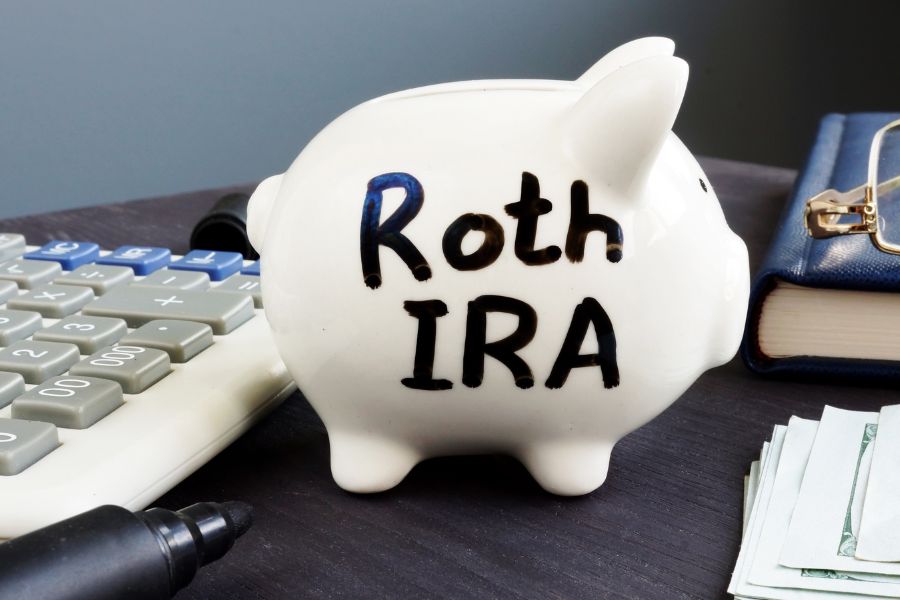
If you earn less than the limit, your contribution is capped at your income.
One major benefit: Roth IRAs have no required minimum distributions (RMDs).
You can let the money grow as long as you want.
However, you can’t deduct contributions from your taxes now, and there are income limits for eligibility.
If you earn too much, you may need to use a backdoor Roth strategy.
Traditional 401(k) and Employer Match
A Traditional 401(k) uses pre-tax dollars, lowering your taxable income now.
Taxes are due when you withdraw the money in retirement.
This can help if you expect to be in a lower tax bracket later.
One of the biggest advantages is the employer match.
For example, if your employer matches 50% of your contributions up to 6% of your salary, that’s free money.
Always try to contribute at least enough to get the full match.
In 2025, you can contribute up to $23,000 (or $30,500 if you’re 50+).
Withdrawals before age 59½ usually face a penalty plus taxes.
This account is ideal for long-term growth, but you have less flexibility in accessing funds early compared to a taxable account.
Taxable Brokerage Accounts and SEP IRA
A taxable brokerage account has no contribution limits and no withdrawal restrictions.
You can invest in stocks, ETFs, or bonds and sell anytime.
The trade-off is paying capital gains taxes when you sell investments for a profit.
This account is useful for goals before retirement or for investing extra money after maxing out tax-advantaged accounts.
You can also manage taxes by holding investments for over a year to qualify for lower long-term capital gains rates.
If you’re self-employed, a SEP IRA is a great option.

It allows much higher contribution limits (up to 25% of compensation, capped at $69,000 in 2025).
Contributions are tax-deductible now, and withdrawals in retirement are taxed as income.
A SEP IRA works well if you run your own business or freelance, but like a traditional IRA, it has early withdrawal penalties before 59½.
Investment Strategies for Long-Term Wealth
I focus on strategies that balance growth with simplicity.
I choose methods that work for decades, not just months, and that fit well with my personal financial goals and risk tolerance.
Why Index Funds Win for Most Investors
Index funds give you instant diversification.
Instead of buying single stocks, you own small parts of hundreds or even thousands of companies.
This reduces the risk of one bad stock hurting your portfolio.
Index funds also have low fees compared to actively managed funds.
Over 30–40 years, saving even 1% in fees can mean tens of thousands of dollars more in your account.
I prefer broad market index funds, like those tracking the S&P 500 or total stock market.
They cover many industries and help you capture overall market growth.
Here’s a quick comparison:
| Investment Type | Diversification | Fees | Time Needed to Manage |
|---|---|---|---|
| Index Funds | High | Low | Minimal |
| Individual Stocks | Low–Medium | Varies | High |
| Actively Managed Funds | Medium–High | High | Medium |
Setting and Tracking Your Financial Goals
I always start by writing down clear, measurable goals. For example, “Have $1,000,000 by age 65” is more useful than “Save for retirement.” Breaking big goals into smaller milestones helps. If I invest $25 a week, I track my progress each year to see if I’m on pace. This keeps me motivated and shows if I need to adjust my contributions. I review my goals at least once a year. Income, expenses, and priorities can change, so my plan needs to adapt.Tracking tools and apps make it easy to see progress in real time.

Working With a Financial Advisor or Professional
Sometimes, I work with a financial advisor for expert guidance on complex decisions.
This includes tax planning, retirement income strategies, and choosing the right investment mix for my risk level.
A good advisor should be fiduciary, meaning they must act in your best interest.
I always ask how they are paid—fee-only advisors often remove conflicts of interest.
Even if you manage most investments yourself, scheduling a check-in with a professional can help you catch mistakes early and make sure you’re still on track for your long-term goals.
Maximizing Your Millionaire Plan: Tips and Considerations
Three practical factors can make or break a long-term savings plan: inflation and taxes, making saving automatic, and the habits that keep you on track for millionaire status.
Each one affects how much your $25 per week actually grows over decades.
Dealing With Inflation and Taxes
Inflation reduces the buying power of your money over time. Even if you reach $1 million by age 65, that amount may not buy what it does today. For example, with 3% annual inflation, $1 million today is worth about $476,000 in 40 years. To protect your savings, invest in assets that historically outpace inflation, like stock index funds.

Review your portfolio every few years to make sure it’s still positioned for growth. Taxes can also cut into your returns. Use tax-advantaged accounts like a Roth IRA or 401(k) when possible. This lets your investments grow tax-free or tax-deferred, depending on the account type. By planning for both inflation and taxes, you keep more of your money working for you over the long term.
Automating Your Savings Plan
I make my savings automatic so I don’t rely on willpower.
Set up an automatic transfer from your checking account to your investment account every week.
This way, your $25 contribution happens without you thinking about it.
Automation helps you stay consistent when life gets busy.
Treat your savings like a bill that must be paid, no matter what.
Some banks and brokerages let you round up purchases and invest the spare change.
While small, these extra contributions speed up your progress toward millionaire status.
By removing manual steps, you make it harder to skip a week and easier to stick to your plan for decades.
Staying Consistent and Avoiding Common Pitfalls
The biggest threat to your savings plan is stopping or pausing contributions. Even missing a few years early on can cost you hundreds of thousands in lost growth due to compounding. Avoid chasing “hot” investments or pulling money out during market drops.

Selling in a panic locks in losses and slows your progress. Watch for lifestyle creep. As your income grows, increase your weekly savings amount instead of spending it all. Even raising your contribution from $25 to $35 per week can shave years off your millionaire timeline. By staying disciplined and avoiding these traps, you give your plan the best chance to succeed.
Frequently Asked Questions
I’ve crunched the numbers on what happens when you put away $25 every single week and invest it wisely. The results depend on how early you start, the interest rate you earn, and whether you reinvest your returns. Small, steady contributions can grow into a large sum over decades because of compound interest. The earlier you begin, the more time your money has to multiply.
What’s the total amount you can accumulate by saving $25 weekly until retirement?
If you save $25 each week from age 20 to 65 and earn about 10% annually, you could end up with around $1 million.
Without investment growth, the total would be much lower—just the sum of your deposits over the years.
How does investing $25 a week compare to saving without interest?
If you only save and never invest, $25 a week for 45 years equals $58,500.
With investing, especially at a strong but realistic rate like 8–10%, the total can be many times higher because your returns also start earning returns.
What kind of interest rate is needed to become a millionaire by saving $25 a week?
To reach $1 million in 45 years starting with $25 a week, you’d need an average annual return of about 10%.
This is possible with long-term stock market investing, but it’s not guaranteed every year.
Can you retire comfortably by only saving $25 per week?
Saving $25 a week might not fully support your retirement dreams, but it’s a solid way to start.
Think of it as building a habit that sets the foundation for bigger financial moves down the road.
What are the best investment strategies for small weekly savings like $25?
I love using low-cost index funds and ETFs that mirror the stock market.
Setting up automatic weekly contributions keeps me on track, and I always reinvest dividends to boost growth.
Even small amounts can add up over time with the right strategy and a bit of patience.
How does compound interest affect your $25 weekly savings over time?
Every week, your savings earn interest, and then that interest earns more interest.
Over the years, this effect grows.
Compound interest lets your money work for you.
Small weekly deposits can turn into a surprisingly large sum.
Watching your savings snowball over time feels rewarding and motivates you to stay consistent.
Even if you start with just $25 a week, the magic of compounding can help you reach your financial goals faster.
